Chapter 18 of 29
St Petersburg
In 1968, with some firm encouragement from my wife, I began preparing to enter a higher military academy. I set my sights on the A. F. Mozhaysky Academy in Leningrad, but my application was almost withdrawn. Here is why. Until then, SOBIS crews had consisted entirely of officers; that year a conscript was assigned to mine. He was no ordinary conscript but Iosif Leonidovich Kuris, who had completed two years at some Odessa college. The men in the barracks called him Yosya. He was red-haired and barely came up to my breast pocket—not stupid, but excessively talkative, a foul-mouthed, arrogant know-it-all. Parcels of American cigarettes arrived for him from Odessa; he called everyone but me “career men” and shirked his work. To crown it all, during the May holidays he became the only man in the entire unit to get drunk, and the patrol had enormous trouble catching him. We chased him across the steppe almost all the way around the base. I had already resigned myself to having my admission refused, but in the end nothing came of it.
I go to the city of three revolutions. Those wanting to enter Mozhaika were quartered in a summer field camp, in ten-bed tents near the settlement of Mozhayskoye, under the poplars planted on an old field where General A.F. Mozhaysky tested his aircraft. The trainers were seasoned city lecturers, mostly associate professors. It looked like this was a decent extra earnings on top of their salary. Russian language was taught by an older lady, an associate professor specialized in Lermontov, who would, whenever there was a chance, read aloud to everyone the poets of Russia beautifully. From her we heard a categorical statement of Lermontov’s superiority over Pushkin, at least in creative productivity. If you compare how much each of them wrote in their short lives, then that is so. Fresh air and solid sleep helped the forgotten subjects stick quickly. The weather was as if it had been arranged, only sunny days. Like in Kazakhstan, only pleasant. I felt so comfortable that I fell asleep in the tent waiting for a call to some exam and was woken by the loudspeaker.
I was admitted to the electrical engineering faculty by specialty, but wrote a report about my boundless love and attachment to radio and was enrolled in radio engineering. Upon joining I was given 15 days for “saying goodbye to the unit,” and I rushed light to my parents in Melekses for a week, then to Tyuratam, to Lena. I said goodbye to the fighter friends, my comrades, gave out a few things and got on the northbound train. I thought I would still return. It turned out never. Lena stayed to finish up to maternity leave and to clear session arrears at her MAI. On the “desyatka” it had already been three years since the branch of this Moscow institute had opened.
Immediately upon arriving in Peter I looked for a rental apartment. They gave me an address on Primorsky Prospect. I went there; the district was wonderful, it is Krestovsky Islands, the loveliest park area. But the room owner was in Botkin Hospital. I went to Botkin. A doctor showed me the road across the hospital’s forest-park area. We got to talking. Hearing that I had served in the Kyzyl-Orda oblast, he exclaimed: “Well, we have there a permanently operating anti-plague and anti-cholera expedition.” Right, not every year, but sometimes on the range they announced either a cholera or plague quarantine. Some problems with old Kazakh burial sites, with the tradition of burying a dead person in a sitting position. But somehow everything passed. I found the landlady and worked out the price and move-in. Soon the landlady was discharged from the hospital and I moved from the barracks near Primorsky Prospect. The landlady turned out to be a blockade survivor and told the bitter truth about those years, not heroic at all, and more frightening than what we were shown in films and Soviet books about the blockade. About meter-thick layers of the dead on the ice of Leningrad canals and rivers, laid in anticipation of the river break-up. And that was how they were “buried” in the first blockade winter. About her friend’s husband being eaten and similar things. It is hard to remember. I settled. The room was small, but close to the academy.
In January I went to Ukraine, picked up Lena from the maternity hospital with Tatyka, and in March we flew to Peter, already three of us, the whole family. The ticket to Peter cost only 19 rubles. And in summer father came to visit us; I was then in summer camps in Toksovo. There they gave modern combined-arms training.
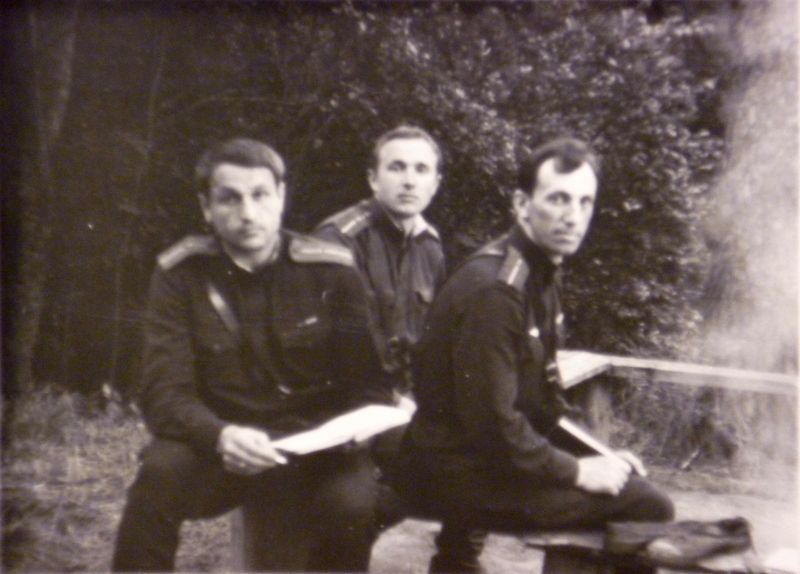
Vova Kochnev on the left, Kolya Guyvan on the right. Toksovo.
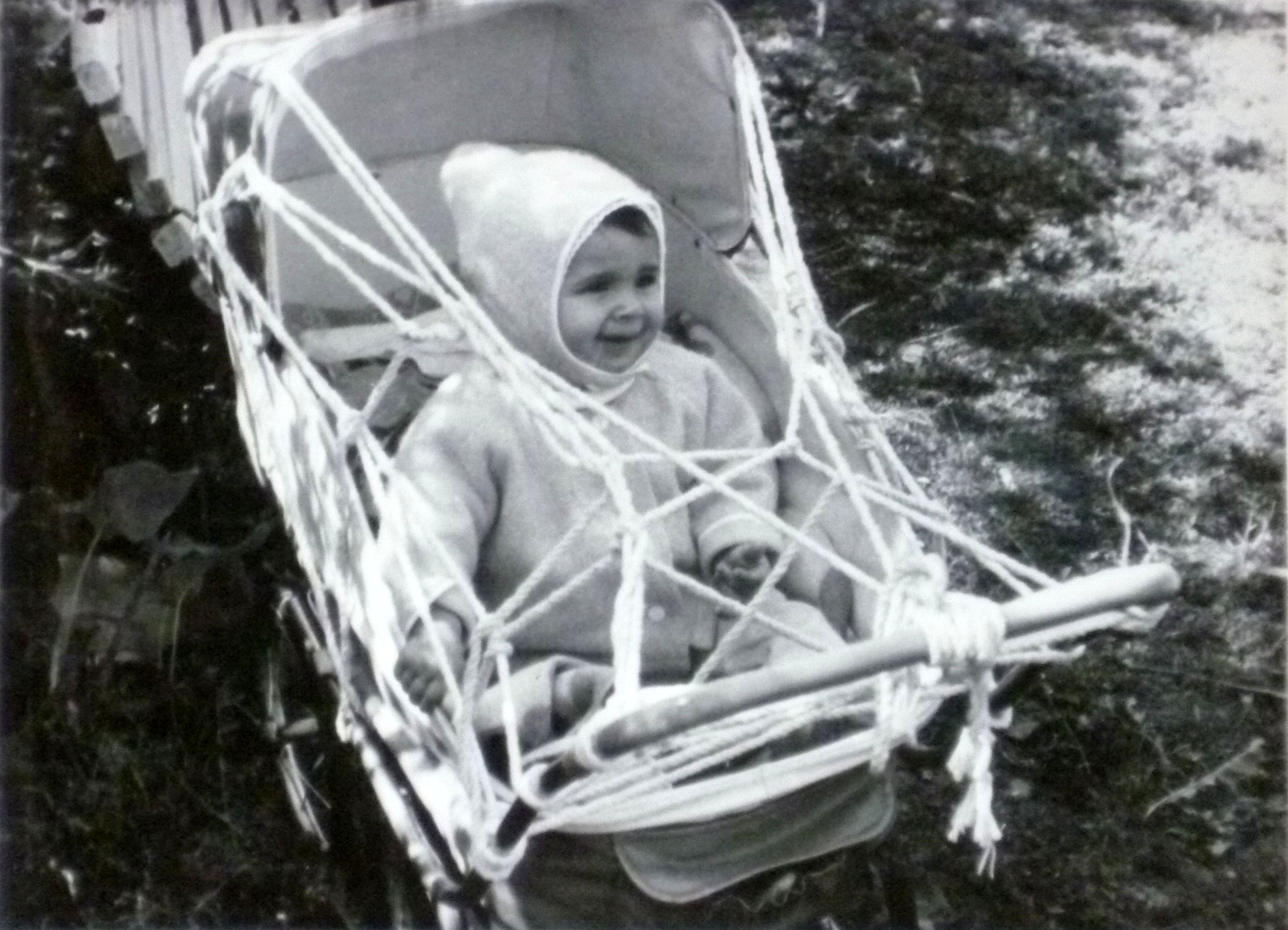
I saw how napalm works. I came back from the camps and did not recognize Tatya’s stroller; it was all tangled with ropes from above. It turned out Tanya had already started to stand on her feet and was actively rocking the stroller. So this inventive father found a simple solution to the problem.
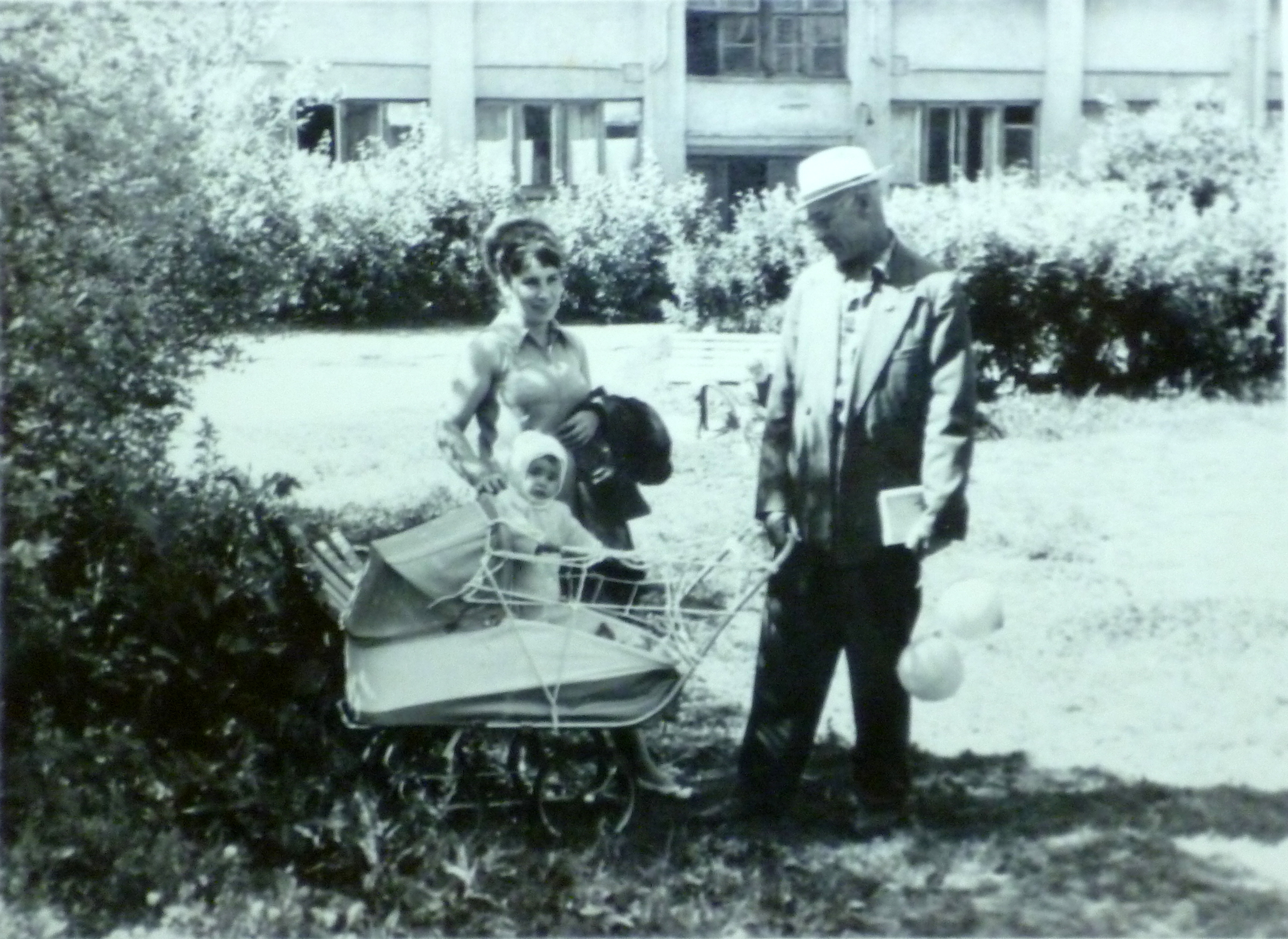
We lived reasonably well, but without excess in everything. I even had to sell the gold watch with a bracelet that my parents had given me. A pawnshop appraiser, a swindler, valued the gold case with a heavy gold bracelet at an amount equivalent to half a year’s housing payment. Then my new elegant sweater, a gift from my mother, was handed over, after one month of living, for 40 rubles. In autumn we moved to the academy dormitory on Ruzovskaya Street, 16, in the former tsarist barracks of the Semyonovsky Regiment, the “Sementsy.” The stress is on the final syllable. The street was smoggy and noisy day and night. But for symbolic rent.
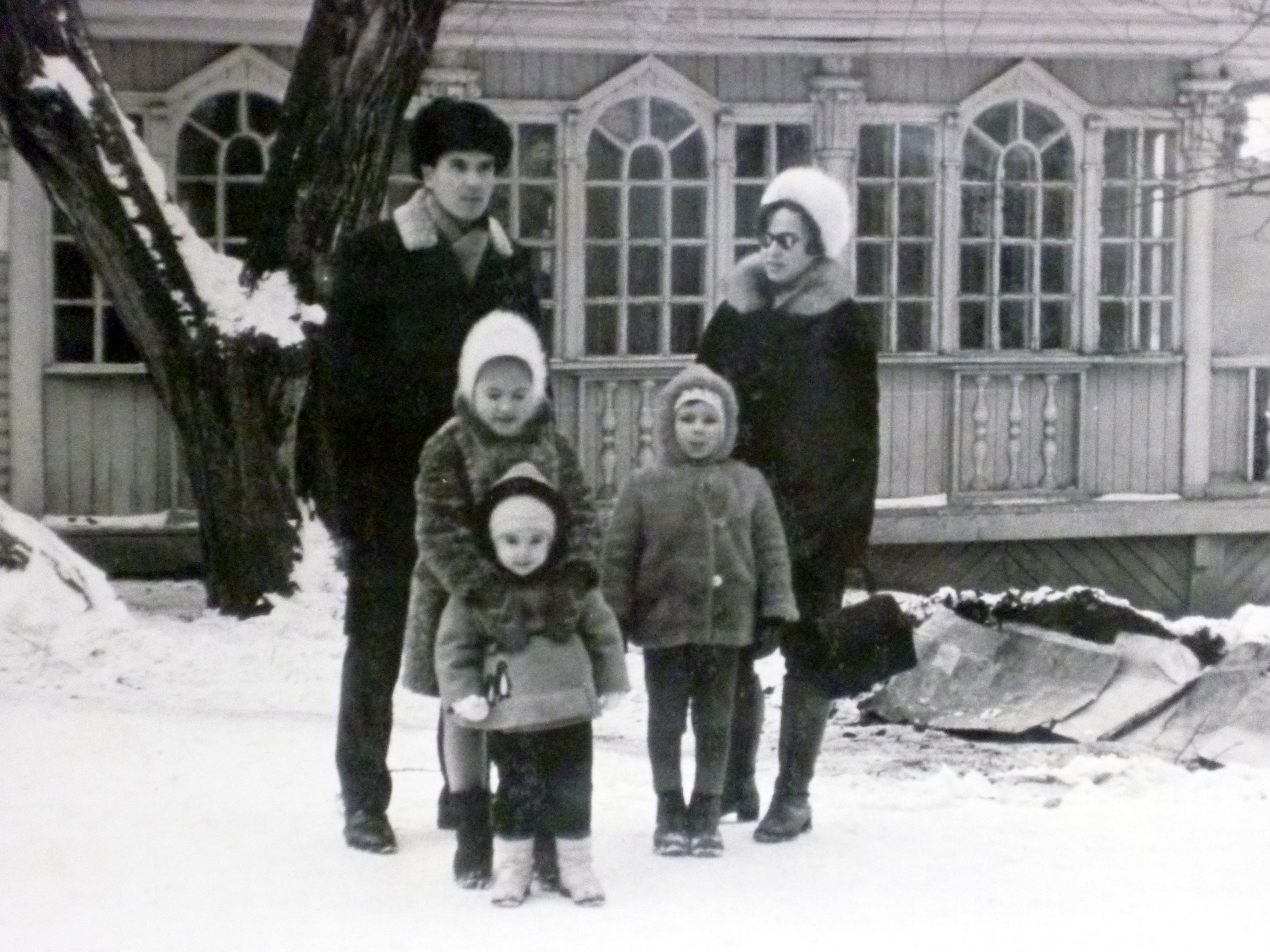
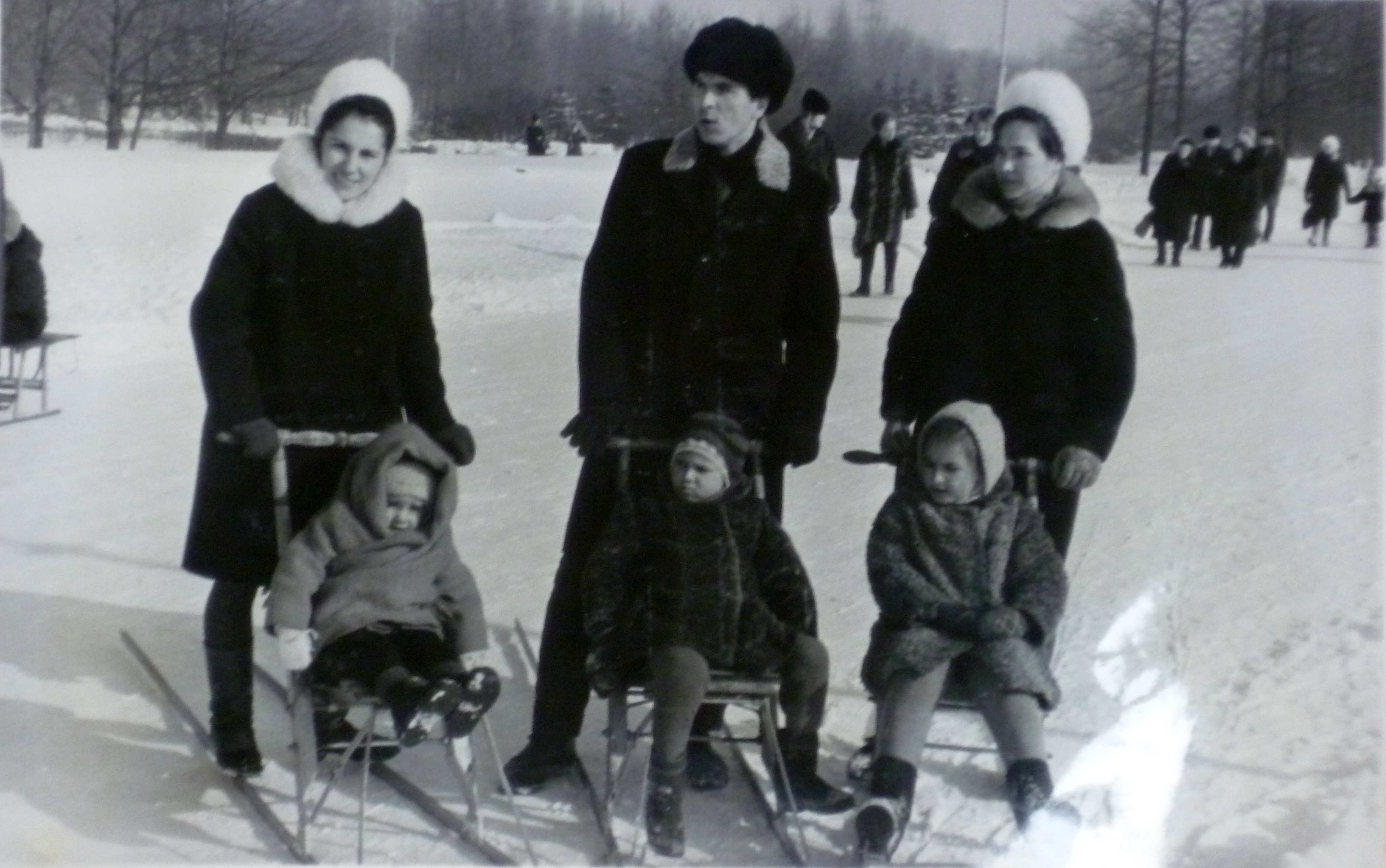
Our good friends from the “Sementsy,” Inna and Slava Panasenkovs, with their little ones and Tatka.
Practically simultaneously with the beginning of classes I started playing for SKA Leningrad. I had to adapt on the move, while the city championship and the universities’ cup were underway at the same time.
Very heavy and long training sessions. I came home to the dormitory late, and still had to prepare for the next school day. In the Academy there was an excellent sports hall nearly the size of a football field. Under the tsars, it had been a riding arena.
Over four years of study and playing for SKA I visited all the sports halls in the city, but no one could even compare to ours. International meetings in various sports were held there regularly, and of course competitions at the level of a USSR championship. And I could show for myself how well fans can shout in Peter. Mozhaika cheered for Leningrad “Spartak” in the Union basketball championship, and after such cheering I came out without a voice and with swollen, beaten red hands. If a match was with CSKA, which is Spartak’s main rival, then the game was interrupted repeatedly. The players could not hear the referees! Until the dissatisfied crowd shouted themselves hoarse, the teams rested.
Playing for SKA I had been to cities such as Odessa, Ashgabat, Alma-Ata, Kharkov. We were invited to a tournament in Odessa to mark the 175th anniversary of the city’s founding. In Ashgabat it was my first time. I liked it very little. It was hot, restaurant food was tasteless, and there were detached, silent black-brown natives in huge ram-hair hats, like the hats of guards of Buckingham Palace.
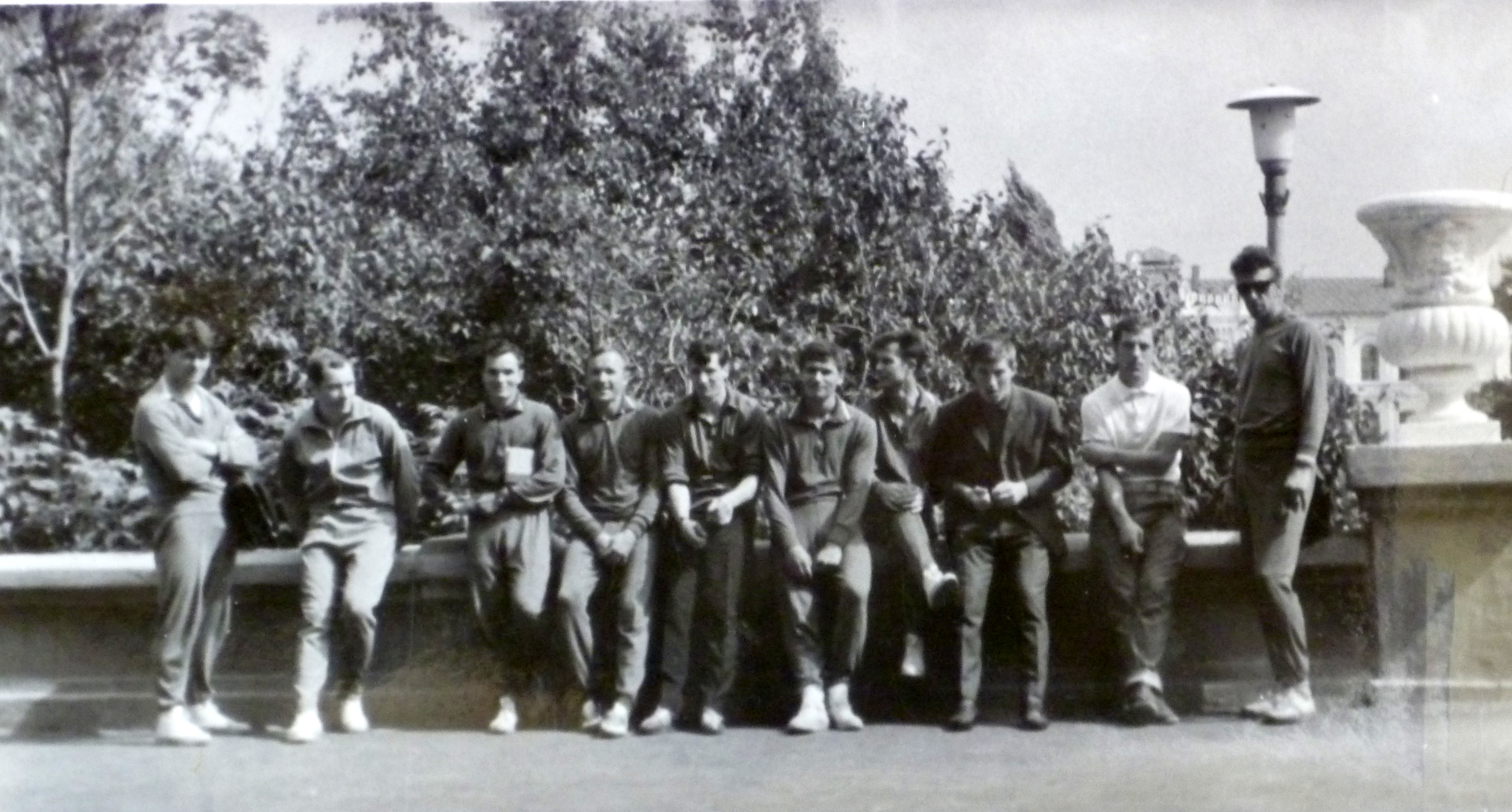
SKA Leningrad
As for Alma-Ata, which I had visited several times before during my service years in Tyuratam-Tama, it is remembered for the fact that I saw with my own eyes how Dungan noodles are made. It is worth devoting a few separate lines to it.
I had “met” it already in 1962, impulsively ordering in some Alma-Ata café. I was in full parade lieutenant’s uniform. They bring a large plate filled with thick noodles and chunks of meat in broth. I do not remember whether I used a spoon or fork, and not at the first try, I hook a noodle and send it to my mouth. I swallow, keep swallowing, keep going. I feel awkward, not knowing what to do next. If you bite, the noodle will fall out of your mouth. It’s also bad to pause and sit with noodles hanging from your mouth into the plate. In my head, in addition to regret at the hasty order, there appeared a terrible thought that I would have to inhale in one breath all the contents of the plate. And it got even worse. The noodle suddenly ended and with splashes hit my face at its free end. I had, foolishly, raised the speed to the maximum so I could finish this extreme meal as quickly as possible. A complete humiliation!
So, almost ten years after that shameful episode, on the Alma-Ata VDNKh grounds I saw, near the fence enclosing the open kitchen of some restaurant, a crowd of about twenty people. We approached with my team mates and saw a young Kazakh cook rolling out a very thick sausage of dough on a very wide table, generously dusted with flour. Rolling it to about seventy millimeters in diameter and a little more than one meter in length, he grabs it by the ends, tears it off the table, stretches it to arm’s width, and energetically swings this now thinner sausage up and down. In several such swings the sausage becomes twice thinner and twice longer. The boy brings his hands together above head level, takes both ends in one hand and with the other hand grabs the almost knee-length drooping bend of this former sausage of dough, turns these two long sausages horizontally, skillfully slaps them on the table, raising a cloud of flour, and immediately starts horizontal swinging to stretch it. After stretching the dough almost twice and bringing his hands together up top, then taking everything into one hand, he already has four long sausages, over a meter each. He again grabs the downward drooping bend and strikes this bundle into the flour on the table, continuing to swing and stretch the dough. He does all this in one rhythm, like a percussionist in an orchestra, very artistically. You can see he gets pleasure from doing this work constantly surrounded by an audience behind the grid.
Literally within five minutes he has in his hands a bunch of very thin noodles, no thicker than four or five millimeters, perfectly even. At the same time the thickness of the whole bunch grew to almost two hundred millimeters! A master! Then he grabs a knife and in the needed place cuts this bunch, and immediately throws all the noodles into a large cauldron. By standard, each noodle should be four meters long. It was this very Dungan noodles that I choked on in the distant year 62.
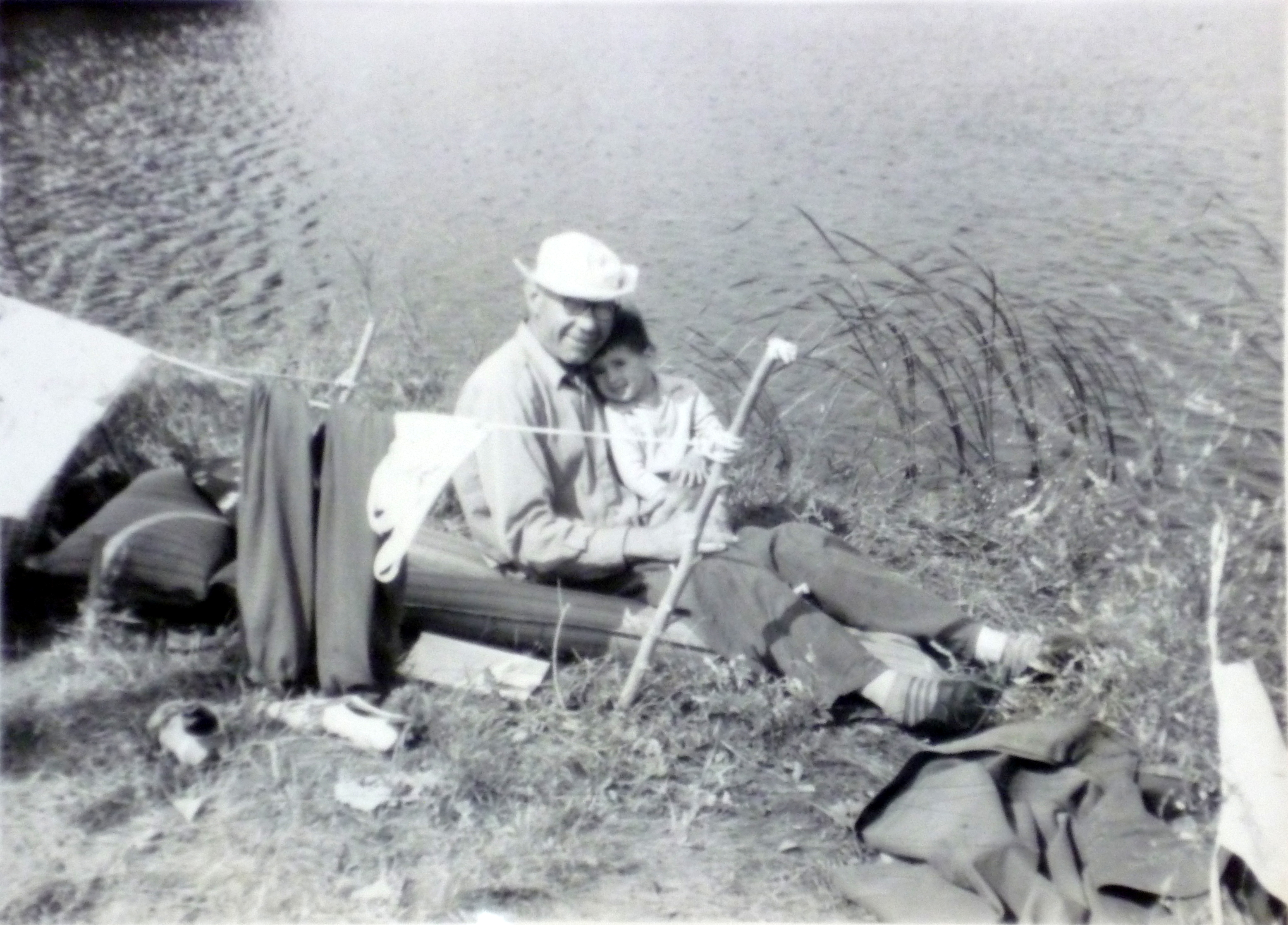
Vacation in Melekses at Cherymshan
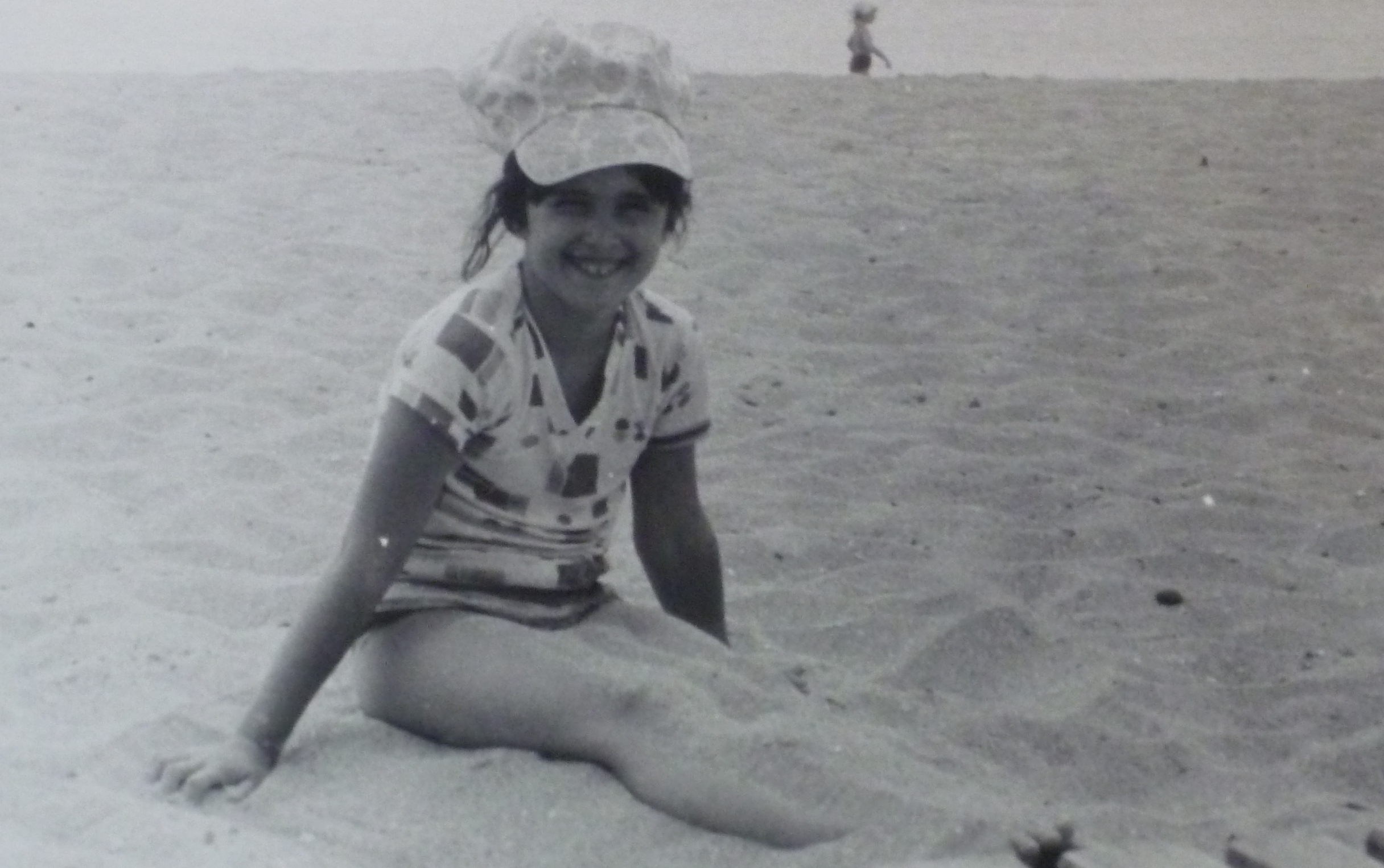
In Yevpatoria