Chapter 21 of 29
Kobuleti
For our spring leave in April 82, Lena and I decided to use a holiday voucher—the only time in my entire service that we did so. We went to an Air Force rest home in Kobuleti, in Adjara, southern Georgia. It was mid-April: the sea was cold, our room was chilly, and the food was adequate but hardly lavish. After dinner, it was our custom to drink a bottle of dry wine with herbs in the room and amazingly tasty gray bread made of Kuban flour. As for bread, we envied the Georgians. They bake it from hard varieties of Kuban wheat. We actively visited the popular places along the whole coast. The service there is well organized. After visiting the next attraction, when the time is moving toward dinner, the bus driver takes the group into the yard of some private house. And Georgian houses are big, two-storey, and inside they are purely barracks-like. Rows of military-style bunks, about 20 in a room, one table and a wardrobe with aluminum spoons and forks and also aluminum plates. No bedside tables, only chairs.
These “hotels” are not heated. But wine is offered for purchase, as much as you want to pour. The food somehow is cold. They say, and you will even eat this.
It immediately stood out the poorly concealed contemptuous attitude of the local “middle class,” the merchants, toward Russians. The high prices for local market farm products were surprising, and in general all across Georgia. Obviously, the price level was pushed up by high local incomes. The price of fresh fish in general seemed sky-high. And they bought it without bargaining. No wonder they would look down on us for our sweaty little money.
I met a representative of the local intelligentsia. Rezo Japaridze, the director of the city bakery. A namesake of the revolutionary, a fellow-countryman of the “Father of All Peoples.” In his time, Rezo studied in Leningrad, and there he found his wife. He is divorced, and planned to go to Leningrad to visit his ex-wife and son. For some reason he often lingered around our rest home, and he was clearly drawn to socializing with the vacationers. Once, when answering my questions about the life and customs of the natives, Rezo said, almost in passing, that no even slightly significant position in Georgia can be held by a non-Georgian. I did not immediately understand the meaning of his words. I asked again. At that moment we were walking near the railway station area. Rezo says: for example, the head of a station can be only a Georgian, from Svaneti or Megrelia. As for a janitor, it can be an Abkhaz or an Adjaran. To all my passionate objections and outrage about racial division, he gave one answer: “It is customary for us. ”
This was an astonishing revelation, insight, and surprise to me. And I had thought that all those Caucasians who lived so comfortably and comfortably in the USSR were Georgians. But it turns out that inside this sunny republic, relations between representatives of different tribes are not at all friendly. Of such, to put it gently, antagonism, I had never heard in Soviet publications, in any bad film, or even in private conversations before. It became clear that the CPSU, quite consciously, tolerated this Georgian spillover of ethnic chauvinism.
Fishing, (I brought the tackle with me), did not work out. Fish do not come to the shore at this time. And you cannot make anyone swim in the sea in April. One or two tipsy vacationers, foolishly stepping into the water this far, can be seen on some other sunny day, no more than that. I started preparing bamboo rods. A curious effect from the first visit to a bamboo grove. Thousands of rods surround you in a dense, hard-to-pass stockade. The eyes wander and greed awakens. I could just take all that wealth away. I understand the feelings of treasure hunters and pirates…
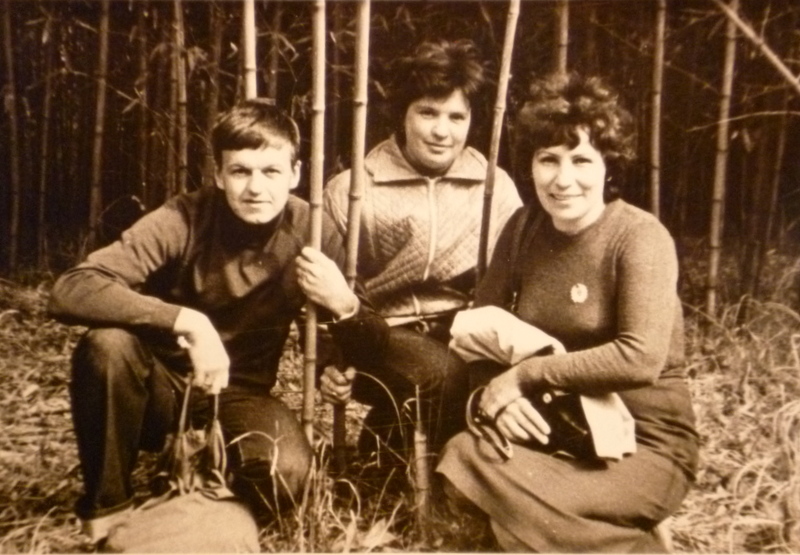
First and foremost, I found out at the station the rules for transporting oversized baggage. Then I went to the sanatorium garage, managed to get a fragment of saw blade, and on the morning of the next day headed to the “treasure house.” Not in a hurry, with taste, I choose a suitable plant and cut it to the length allowed by railway transport rules. I cut six rods, tied them tightly in a bundle, and waited impatiently for the end of forced idleness. I wished to get back to my North sooner.