Chapter 5 of 29
A City on the Angara
In short, six close friends from my school set off for Irkutsk at the end of July. After sweltering in the railway carriage for a full day, we rushed straight to the Angara for a swim. An unpleasant surprise awaited us: the river was icy, nothing like our Yenisei. We could not wade in above our knees.
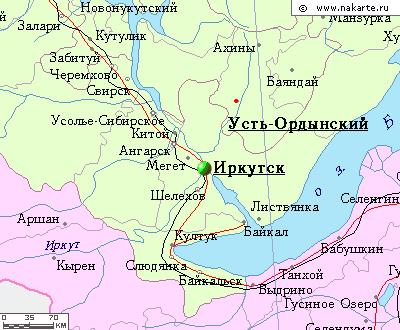
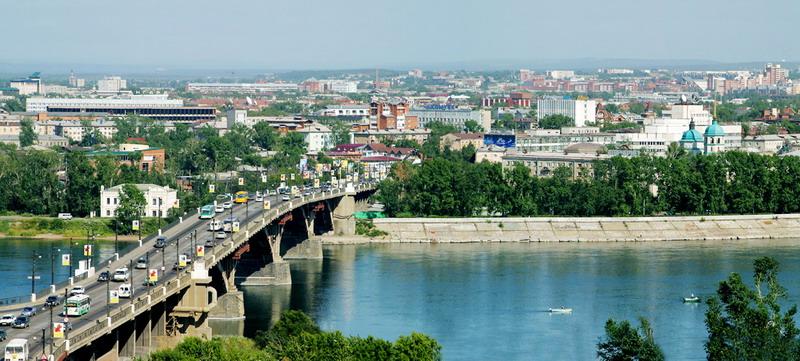
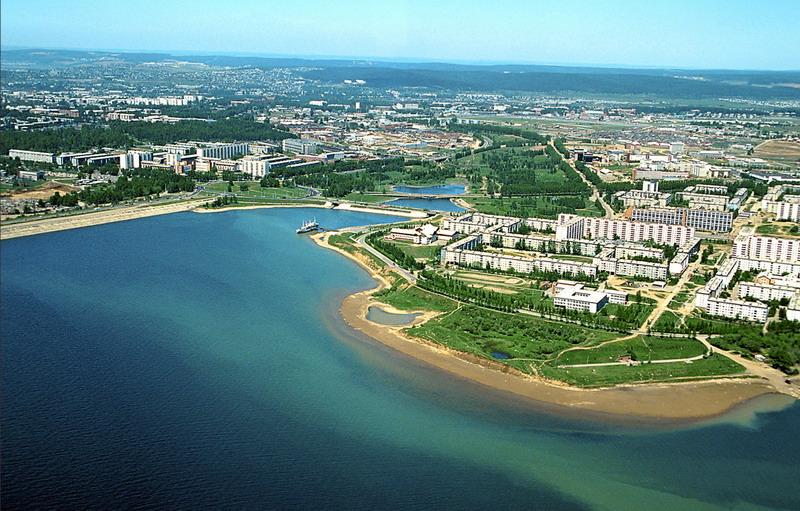
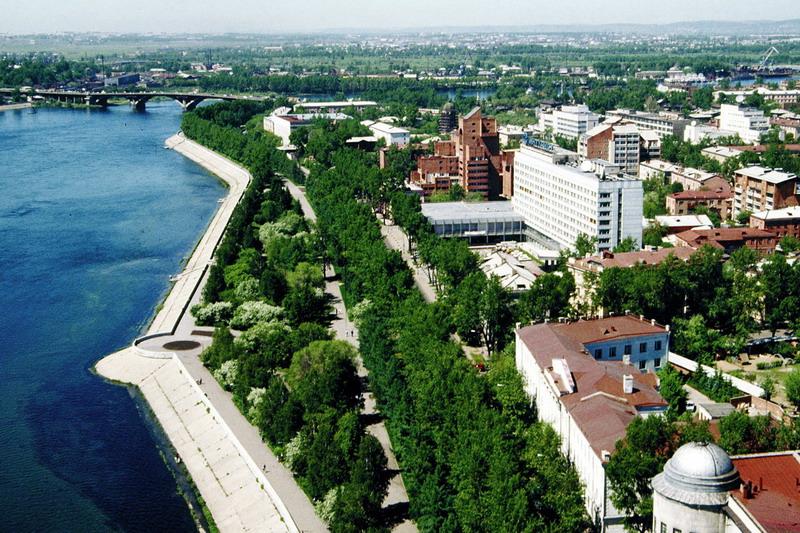
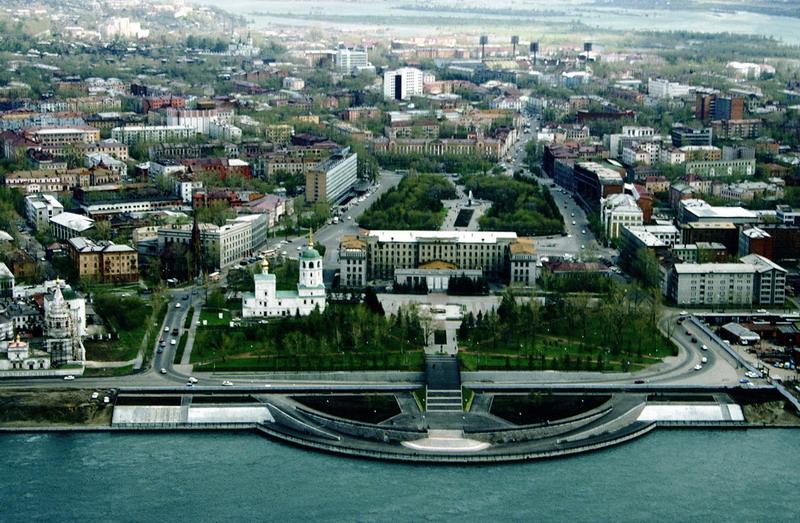
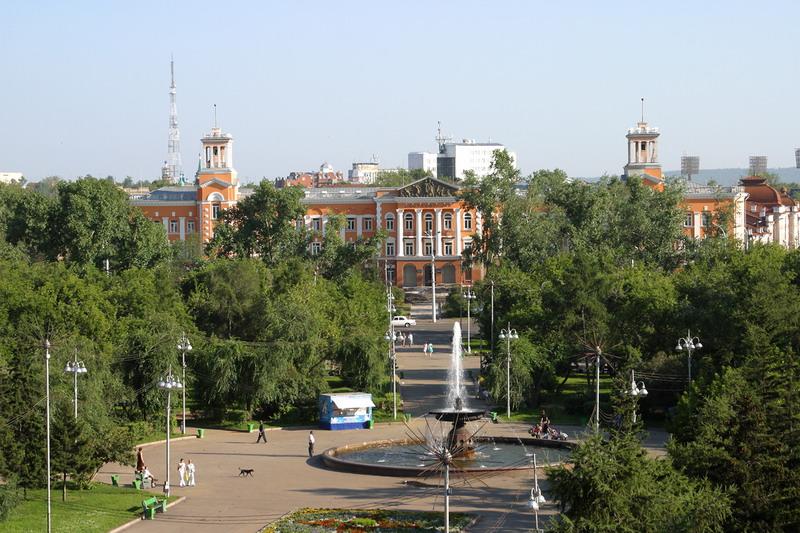
Irkutsk
We were housed in a tent camp in a beautiful birch grove beside the airfield. We prepared for the examinations, did the odd bit of communal work with a broom, and—my main occupation—watched aircraft take off and land. What an intoxicating roar those jet engines made! I would run out onto the runway to touch the concrete scored with burnt rubber. We lived in ten-man army tents. At night Sergei and I would get up and fool around: we squeezed toothpaste into the nostrils of men who snored, or stuck a lit cigarette there instead. The snorer would lie there gently puffing smoke, while we found it hilarious.
At the end of August came the examinations and a final 1 km cross-country run. Convinced that I was in excellent shape and would finish among the leaders, I sprinted from the start, reached the finish on my last breath like the messenger from Marathon, then collapsed and vomited in the bushes from sheer exhaustion. For a month I had lived entirely on lemonade and gingerbread from the field kiosk. Everyone else ate in the soldiers’ mess, while we pampered mummy’s boys chose spiced cakes, gingerbread, and lemonade. Adult independence! It taught me a hard lesson.
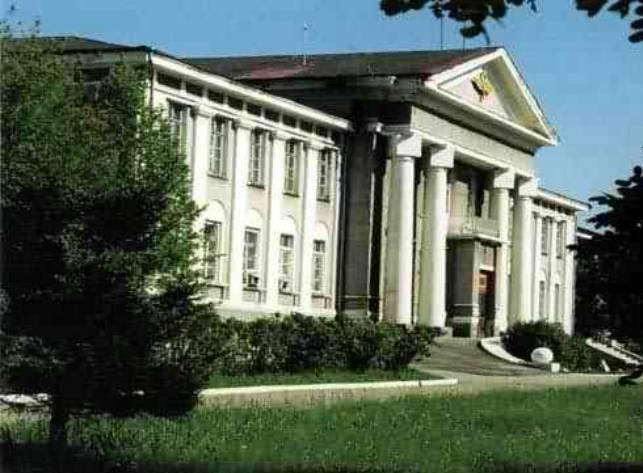
Main entrance to IVATU
Two of us were admitted to the school: Sergei Legkov and me. Sergei would study engines and airframes; I would specialize in aircraft electrical instruments. First we were fed the standard cadet lunch. The cooks’ specialties were pilaf with large chunks of pork and fritters three times the usual thickness. Then they cut our hair, washed us, and issued uniforms and boots. That was when the effect of uniformity struck: I could not immediately pick Sergei out from the homogeneous mass of cadets. Classes began on the first of September.
Our intake was divided into companies and housed in an enormous three-story L-shaped building, formerly the barracks of a junker school.1 My unit, Second Company, occupied the second floor. Several similar buildings enclosed the great parade ground on three sides. Nearby stood the mess hall, utility buildings, boiler house, and checkpoint; the officers and instructors lived near the teaching blocks, about a kilometer from our barracks, with the infirmary and guardhouse a little farther away. Cobbled roads linked everything, lined by poplars prodigiously generous with their fluff. Colorful aviation propaganda was everywhere. Rubbish bins were made from small aerial bombs cut in half; children’s swings in the officers’ quarter were fashioned from external fuel tanks, aluminum rocket-torpedoes with openings cut for seats. Every building and road pressed close against the airfield. A powerful red runway centerline light burned on the roof of our corner barracks, and at first every landing or departing aircraft seemed to roar past with its lowered or not-yet-retracted undercarriage almost touching the roof. I was not frightened, but the engine noise was impressive. This music sounded every five or ten minutes by day and less often at night. In time I stopped even looking up. I grew accustomed to it, and it no longer disturbed my sleep.
And so the whirl of study and service began.
Second Company, Second Platoon. The company commander was Major Vasilevsky, nicknamed Kostya; our platoon commander was Captain Saifutdinov, or Saifut.
Kostya was an excellent drill officer, a bully and a dandy; Saifut seemed rather cowed. The battalion commander was Lieutenant Colonel Borisov. When a cadet had offended, Kostya Vasilevsky fixed him with a terrifying, unblinking stare that traveled repeatedly from the poor man’s head to his feet, then paused to bore into and scorch the culprit’s guilty, downcast eyes. At the same time he twisted his face into a feral grimace and noisily sucked air through clenched teeth. He reduced you to ashes. Perhaps his father—or some senior commander—had looked at him that way in childhood. At parades and at the head of our company he marched brilliantly, with obvious relish and pleasure.
The first thing we learned was to go to bed and rise into formation: the standards were 45 seconds and 1 minute 20 seconds respectively. We practiced each command ten times every evening. It is a wonder we did not break our legs jumping over beds and stools at the order “Lights out!”
I discovered that I was utterly incapable of waking in the middle of the night and then consciously taking up duty—for example, as company orderly. Someone woke me, I got up and began dressing, but the moment the orderly or duty officer left, I automatically fell back onto my bunk and instantly slept again. Naturally, the next awakening was less delicate and finally produced the required response. They cured me of that ailment in a single night.
On 7 November 1958 we took the oath. From that moment I possessed my own assault rifle, an ammunition pouch with two spare magazines, and a gas mask with an OZK kit. The OZK was the standard combined-arms protective ensemble: a bag containing overboots, gloves, and a cape. Then came lessons, live firing, drill, guard duty, and work details.
Mathematics, physics, materials science, strength of materials—and Marxism-Leninism, damn it. The latter was taught by Colonel Shagimardanov, an enormous Tatar or Bashkir, a pure-blooded orthodox believer. At that time the country was ruled by a talkative former Stalinist lackey who had suddenly seen the light and exposed the personality cult, yet continued to keep the people bent beneath him, granting only small concessions for show. He carried on a little and delivered hours-long speeches for the masses to study in depth afterward.
That colonel-teacher immediately marked me down for my foolish questions about the substance of the departed leaders’ “sacred” writings. I had somehow failed to grasp at once the thesis that socialism advanced from one stage to another by leaps. Nor could I reconcile Lenin and Stalin as the leaders, inspirers, and guides of every achievement and victory with the simultaneous Marxist denial of the individual’s role in history. A cadet who doubts is himself suspect. In any case, he plainly took a dislike to me and harried me mercilessly throughout the course. What would he have done to me five years earlier?
I also remember one amusing detail of cramming Marxism. We were advised that the five well-known theorists of the Emancipation of Labor group were easy to memorize from the initials of their surnames: Plekhanov, Ignatov, Zasulich, Deutsch, and Axelrod.
At least once a month we had a training alert. In the middle of the night, more often toward dawn, our sweetest sleep was cut by the shout: “Company! Alarm!” I was also an ammunition carrier. I had to dress, arm myself, put on all my equipment—including the rolled greatcoat—grab a twenty-kilogram ammunition box, pour downstairs with the crowd from the second floor, and keep up with the company running into the darkness. Everything happened amid uproar and swearing. An avalanche of men laden with weapons and equipment flowed down the broad staircase, growing at every floor. We would heave the ammunition box onto someone’s back and merely hold it steady while he yelled; he had only two flights to suffer. Each squad had two ammunition carriers, and if the alarm included a long run, my partner and I brought towels so we could carry the box between us more comfortably.
We completed the full basic soldier’s course, including digging a full-depth fighting trench from a prone position under simulated enemy fire—the instructor’s vigilant eye and shouted encouragement. That too had to be endured.
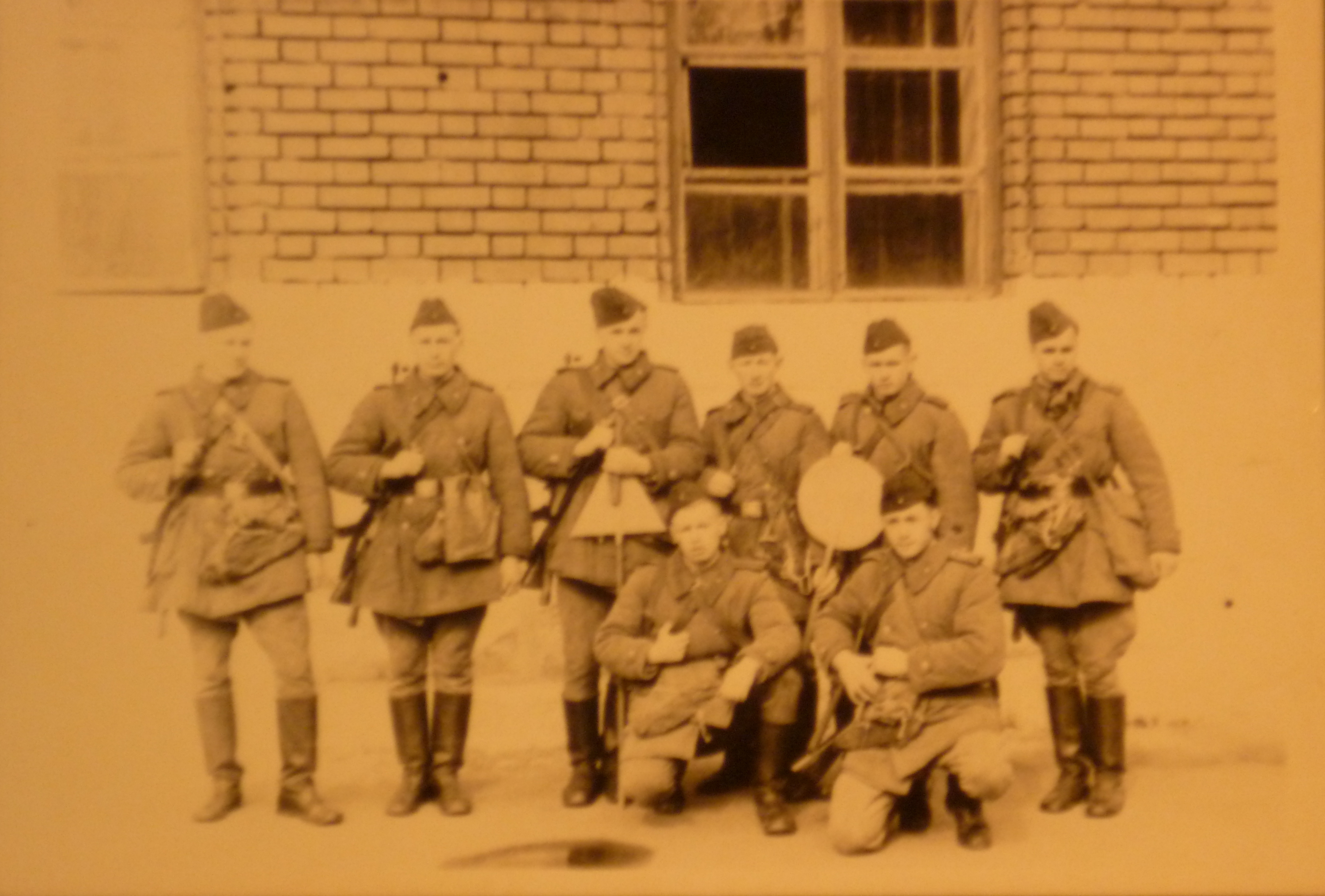
In political classes we were warned about the treachery and greed of the imperialist encirclement, the lesson reinforced by wise quotations from Ilyich on posters—something like, “Strengthen [I forget what] in the most genuine manner!” A grotesque, inexplicably hook-nosed Uncle Sam frightened me and followed me through all 28 years of service, in every military town as far as Kamchatka. Our supposedly far-sighted—but in truth merely power-hungry—helmsmen in the Politburo were quietly planning to build socialism and communism across the entire planet, and guessed that not everyone would welcome the idea. They therefore tried to prepare the Army for major conflicts, invariably involving nuclear weapons. All for the sake of a radiant future.
These were the years after Marshal Zhukov’s dismissal. One of our most important subjects was PAZ-PKhZ: protection against nuclear and chemical weapons.
Among the visual aids in the specialist classroom were large glass cases containing models of hands and human heads, vividly depicting different degrees of injury from chemical and nuclear weapons—mostly with eyes running out. They looked alive, though clearly not for long. We were fascinated by the horse’s gas mask and the horses in anti-chemical harness. Wearing full nuclear-protection gear and some kind of insulated airtight suits, we would spend hours washing and decontaminating a MiG-15. By the end of the day each boot held half a liter of sweat. Then came the gas-mask acclimatization course, with 15 minutes added every day until we reached 6 hours continuously inside the facepiece. It was a nightmare: the rubber caused intense pain by squeezing the face. We attended every lecture and went everywhere in gas masks. We still played jokes. If someone fell asleep, we tried to stick scraps of paper to his eyepieces with saliva. The blind men would sit there, apparently still taking diligent notes. Another trick was to pinch a sleeper’s breathing hose. Every so often the instructor would say softly, “Anyone awake, remain seated,” then shout, “Anyone asleep—stand up!” Half the section would leap to its feet. We laughed and stretched our legs.
The climax of the course was the gas-chamber exercise. In a tent, at the command “Gas!”, the section put on its masks. A cheerful, red-faced, joking major—red-faced, perhaps, from wearing a mask so often—led us inside. Using a noisy lever pump, he sprayed chloropicrin from a cylinder resembling a fire extinguisher. This was our training chemical agent. Individual coughs began at once, then a full chorus. Someone dashed for the exit. I immediately tasted something sour, my lungs reacted, and the urge to cough rose in an uncontrollable wave. I was not among the first to flee, but soon hurried out myself. At first I had thought I could sit it out. Not a chance: the body screamed, “Save yourself!” Every exhalation valve had failed. To make breathing easier, we had kept those precious valves in our tunic pockets for weeks, where they had gathered a little dust. Chaos followed. As I ran out, the crowd had already knocked our major to the ground while he tried to stop them. The standard required more than merely enduring the tent: at the commands “mask punctured” and “hose damaged,” we had to remove and replace the mask, then disconnect the hose and screw the filter canister directly to the facepiece. With a punctured mask, one had to grip the canister neck in one’s lips and breathe through it with closed eyes. I saw plenty of stubborn men trying to last with a faulty valve. Once outside, they dropped to all fours and spent a long, agonizing time vomiting and coughing until they could not speak. Gradually they recovered from the poisoning. Some made several attempts, savoring the experience, so to speak, until they completed every exercise. The joking major was satisfied: he had taught us a lesson for life and made us respect chemical-defense training in a single stroke.
The daily routine was designed from the first days to break the boys’ will and reset mind and body to military mode. Conflicts arose with sergeants and corporals appointed by the command from those who were naturally the most obedient, though not necessarily the cleverest—mostly former enlisted soldiers. Having read in the regulations about the unlimited authority of any superior over his subordinates, a young squad leader with junior-sergeant stripes imagined that he truly wielded absolute and unchallengeable power. Such is human nature. The result for us was extra duty; whenever it was guard duty, I generally drew the most distant post.
I remember Post No. 4, the emergency-reserve warehouse, in particular. It was a very tall, square, single-story building about 30 by 30 meters and, like all the school buildings, made of excellent pre-revolutionary red brick. The school had inherited the premises of the imperial junker corps. Outside, every single brick from ground level to an incredible height had been written on, painted, or scratched with sentries’ bayonets; the cadets must have stood on boxes to carve the upper ones. They still carried Mosin rifles with long triangular bayonets. Taking up the post was like entering a picture gallery with a reading room. Among the more innocent inscriptions I remember: “Life is sad when youth wears a greatcoat and a belt binds youth,” and “Love is a bonfire: do not drop in a twig and it will go out.” The sculptural compositions would not have passed any censor. A veritable Kama Sutra.
In winter the aircraft parking areas were considered the worst posts. Irkutsk winters are cold, and the airfield colder still. The sentry was warmly dressed, but, being warm-blooded, also sought shelter from the wind. Nothing was better than a fighter’s nose-wheel bay, an open cavity under the forward fuselage about half a meter wide, one and a half meters long, and a meter high, into which the nose gear retracted after takeoff. The fool sat there snugly out of the wind while supposedly guarding his post; only his felt boots and the hem of his sheepskin coat remained visible. When our relief came at night through drifting snow, with aircraft stands spread over an enormous area, the entire party first ran swearing from fighter to fighter in search of the rascal. The longer the search, the less time we had to sleep between shifts. Back in the guardhouse we still had to wait for our rifles to thaw: they instantly grew a crust of frost in the warmth, which then melted. We wiped them dry and only afterward applied oil. A guard cycle comprised two hours on post, two hours awake after returning, and two hours asleep. Travel while relieving several widely scattered posts came out of the sleeping period. When was there time to sleep? And so it continued throughout the entire day and night.
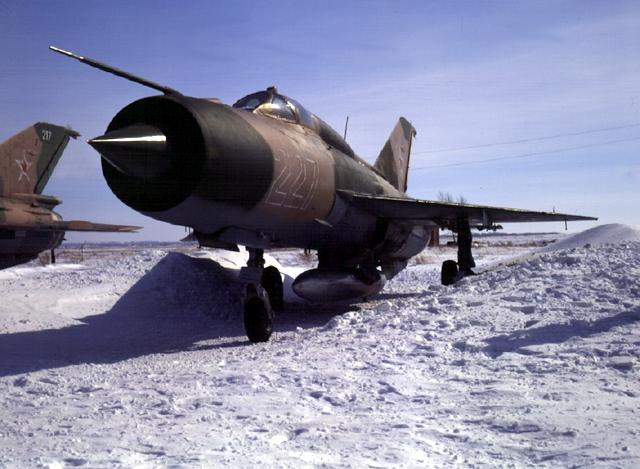
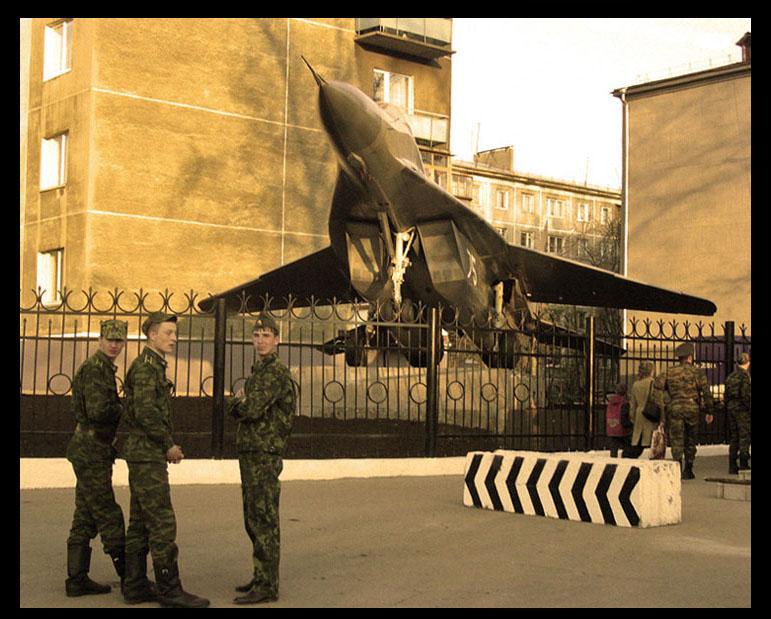
MiG-21
Not at once, but gradually, I noticed a change in myself: the tense sentry who constantly expected a sudden attack was becoming a calm, sensible serviceman. Anyone who has guarded positions with appallingly poor visibility even by day knows that constant sense of concealed danger—behind every bush and every aircraft, especially in bad weather. Guard duty continued in all conditions, and wind and rain robbed the sentry of hearing, the second most important sense at night.
The relief party leaves with the corporal of the guard, and you remain alone against the entire world, with only one reliable friend—your rifle. Sling it around your neck and you feel calmer; then start patrolling the grounds, unless your post is in a watchtower. After one circuit you grow used to the shadows and suspicious rustling and can relax a little, thinking about something unrelated to guard duty and its regulations. Do not forget to check your watch, though, so that just before the relief arrives you can give the proper shout: “Halt! Who goes there?”
A splendid kitchen duty was peeling potatoes—“splendid,” of course, in quotation marks. The school was enormous: five companies of 150 cadets in each of three year groups, plus numerous support units. An unimaginable quantity of potatoes had to be peeled overnight. I was put in charge of two mechanical peelers, tall machines resembling washing machines with horizontal drums. You loaded a sack of potatoes, switched on the motor, and inside the drum spun a rough, slightly wavy abrasive disk. The potatoes bounced about and their skins wore off; you had only to watch the process and stop it in time. If you got distracted, you received a warning from the civilian kitchen supervisor, and if you missed the moment altogether you were given a severe dressing-down while the company was fed potato-sized peas. Once the machines had finished, the entire detail sat down to remove the eyes and finish peeling the potatoes by hand. Mountains of potatoes. A cook remained on duty in the kitchen and, until he fell asleep, fed us to bursting with meat, butter, and anything else we wanted. If you were lucky enough to draw potato duty two or three times in succession, the kilogram or two you gained made a noticeable difference to your appearance.
Boiler-room duty was harder still: bringing in coke and hauling slag to the dump in a handcart. After several trips you earned about 10 minutes of rest—and then came sleep, the eternal companion of hard labor. It felt like a sweet poison spreading through a brain tormented by exhaustion, or like an enormous warm, shaggy mammoth covering you completely and producing an irresistible numbness. In the morning, no matter where you had collapsed to sleep, the fireman would gently prod you with the toe of his boot. You had to get up, wash the grime from your face, neck, and hands, and go straight to class.
Once I drew duty in the pigsty. After the evening change of guards and details, they showed me where to go and where the shovel was kept. At four in the morning I entered what seemed an immense collective-farm pigsty. The smell took my breath away at first; it was damp, stifling, and full of grunting. I grunted back, to establish contact. A weary woman appeared, silently handed me a shovel, and pointed to a distant corner. The pigs’ space was separated from a feeding passage by a low wall about a meter high, and the entire floor sloped toward the wall. The animals were somehow meant to push their manure down the slope and through small openings into the passage, where I would shovel it into a heap. But Soviet pigs, raised in Soviet conditions, had no wish to work. They ate and defecated in place, piling the manure so high that it had nowhere left to fall. The animals stood almost up to their bellies in it. My task was to climb over the wall, shovel the manure downhill under the pigs, and clear the filthy room. The woman shut the little door behind the herd, leaving me alone with those magnificent heaps. Hurrah!
I got used to it. What choice did I have?
Supply duty was always physically exhausting, especially fuel and material handling, and often involved the entire platoon. Whenever a railcar arrived with coal, timber, food, or equipment, the platoon was pulled out of class—or out of bed—and sent to the station. New aircraft that were still classified traveled only under cover of darkness. We once had to move the first Tu-22, which had crashed at Zhukovsky and was only slightly crumpled. It was extremely difficult to transfer by hand
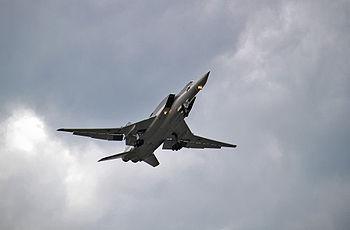
Tu-22M3
the wings from the Pullman railcar onto a special trolley. We struggled all night until morning, then went straight to class. That rule was sacred at the school: no allowances.
We were chronically short of sleep and time for absolutely everything. Barely two weeks into the course, I was also selected for the basketball team. Everything happened at a run—literally so, because an order required every movement outside formation on the school and airfield grounds to be made at the double. I learned to seize every spare minute for sleep and could even switch off while marching in formation. I learned to sleep without shutting down my hearing; if anything, it grew sharper. On a still, dry night one could hear beetles and tiny insects crawling. While guarding the classified rooms—a straight, broad corridor 150–200 meters long in the basement of the main teaching building—my hearing became so acute that I could hear the sentry at the colors shifting from foot to foot upstairs in the entrance hall.
On 31 December 1958 our platoon went on patrol duty in the city. Patrols were armed in those days: an officer walked in front, followed by two men with assault rifles. It was my first city patrol. I strutted along, proud and puffed up like a turkey, forgetting to pull down the earflaps of my hat. Irkutsk is a beautiful city, and the girls in the streets were lovelier still. That New Year’s Eve the temperature fell to −52 °C. After my first two-hour shift I collapsed onto a cot for a nap. They woke me: my nose was white with frostbite and could no longer be rubbed back to life, though my ears recovered. Ever since, my nose has forecast the weather for me. I need no thermometer.
The technical classes were fascinating. An Il-282—then the most modern front-line bomber—stood in the former gymnasium, and it was on this aircraft that our practical study began. I still remember its distinctive smell, a mixture of lacquer and electrical wiring. I studied the equipment not merely with interest but with delight, and still remember countless abbreviations for its onboard systems. Then came my first engine start in a parked Il-28 under an instructor’s supervision. I sat alone in the cockpit, the instructor outside on a ladder, pressed the left-engine start button, and watched all those instrument needles stir and come alive. A miracle! Practical airfield classes were invariably held in winter during the bitterest frosts. That made sense, but it was not easy. You were lucky if your job that day was inside the aircraft rather than through some fuselage hatch or out on the wing.
It was wonderful when someone ran an engine nearby: before the turbine had even stopped, heads, hands, and mittens were already inside the nozzle. Excellent—if only it happened more often!
Il-28
I took part in my first “election.” The procedure immediately puzzled me: it was called an election, yet in practice it was, to put it mildly, dull and entirely devoid of suspense. Later I understood that so-called Soviet power was not connected with its people at all, not even through the much-vaunted Soviets. The fiction of electing “people’s deputies” merely disguised the arbitrary rule of a single infallible Party and its most holy Central Committee. It mocked the people and turned public life into a farce in which every Soviet citizen, Party member or not, obediently played the assigned role.
I read whenever a free minute appeared. The school had a large library. I photographed the other boys with my pocket-sized Zorky camera, and our company set up a small darkroom. Everything came at the expense of sleep, but anyone who truly wanted to do something achieved results. Perhaps the finest example was Valera Lebedev. He became obsessed with learning the clarinet from a small booklet and at first tormented us with squeaks and unpleasant wheezing. I taught him the rudiments of musical notation. Within six months, perhaps less, Valera could play “Petite Fleur” cleanly.
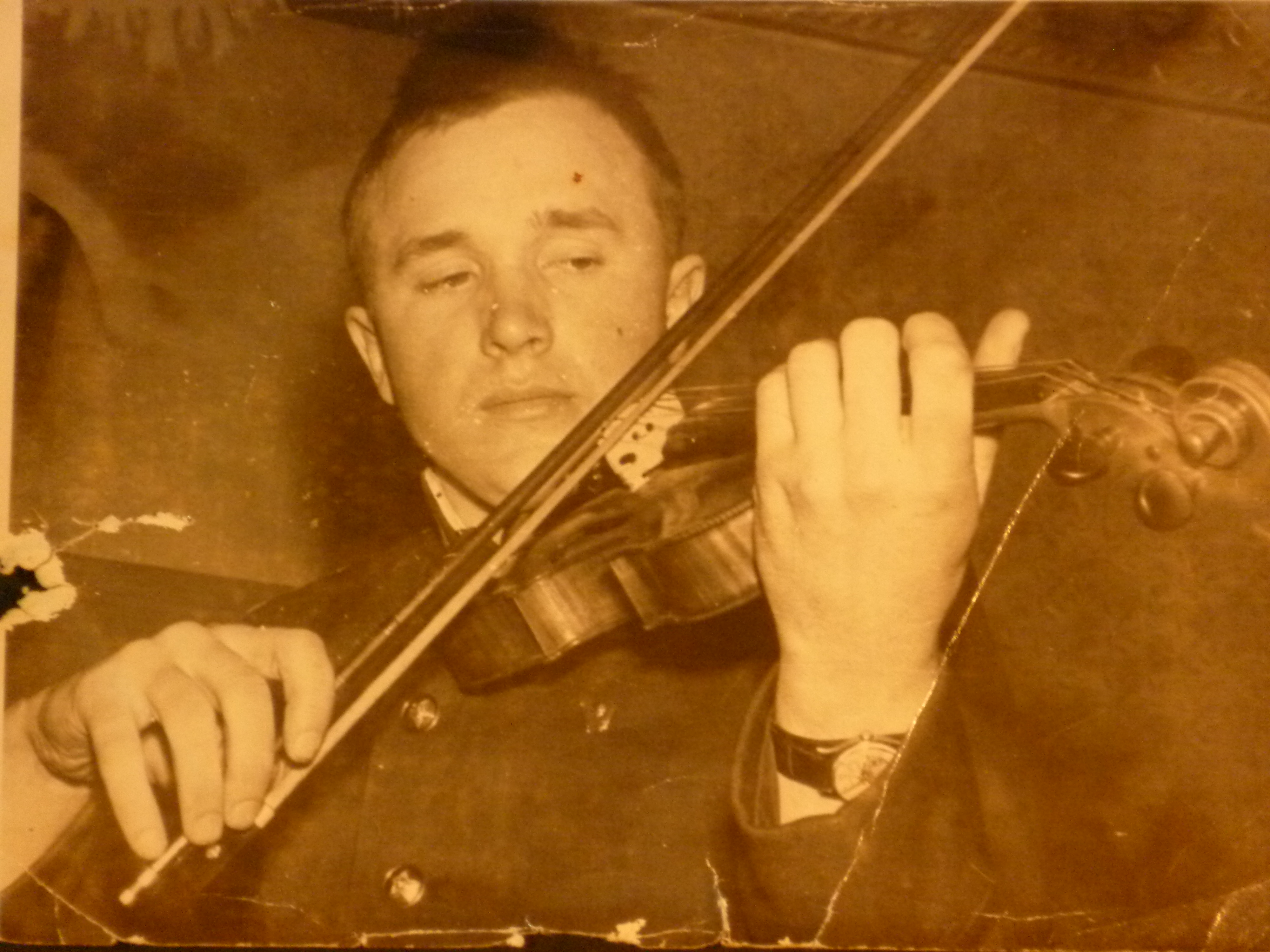
Then came August and my first leave as a cadet. Krasnoyarsk-26, it should be noted, was not the city of Krasnoyarsk but a closed secret city that produced weapons-grade uranium and plutonium.3 My father headed one of its installation directorates; I shall write separately about his life and work. To bring me home, he had to meet me at Krasnoyarsk station in response to my telegram. I was traveling alone in my compartment and, about an hour before arrival, quietly dozed off. I awoke to noise in the corridor: cleaners were washing the floor and the carriage windows from outside, while the train stood in a strange siding among other empty cars. What a panic! I dressed in haste and ran to the station, where they had already stopped calling my name over the loudspeaker. Alongside my father stood Toma Usikova, my schoolboy crush. How embarrassing—and how glad we all were to see one another. What if the train had terminated somewhere else?
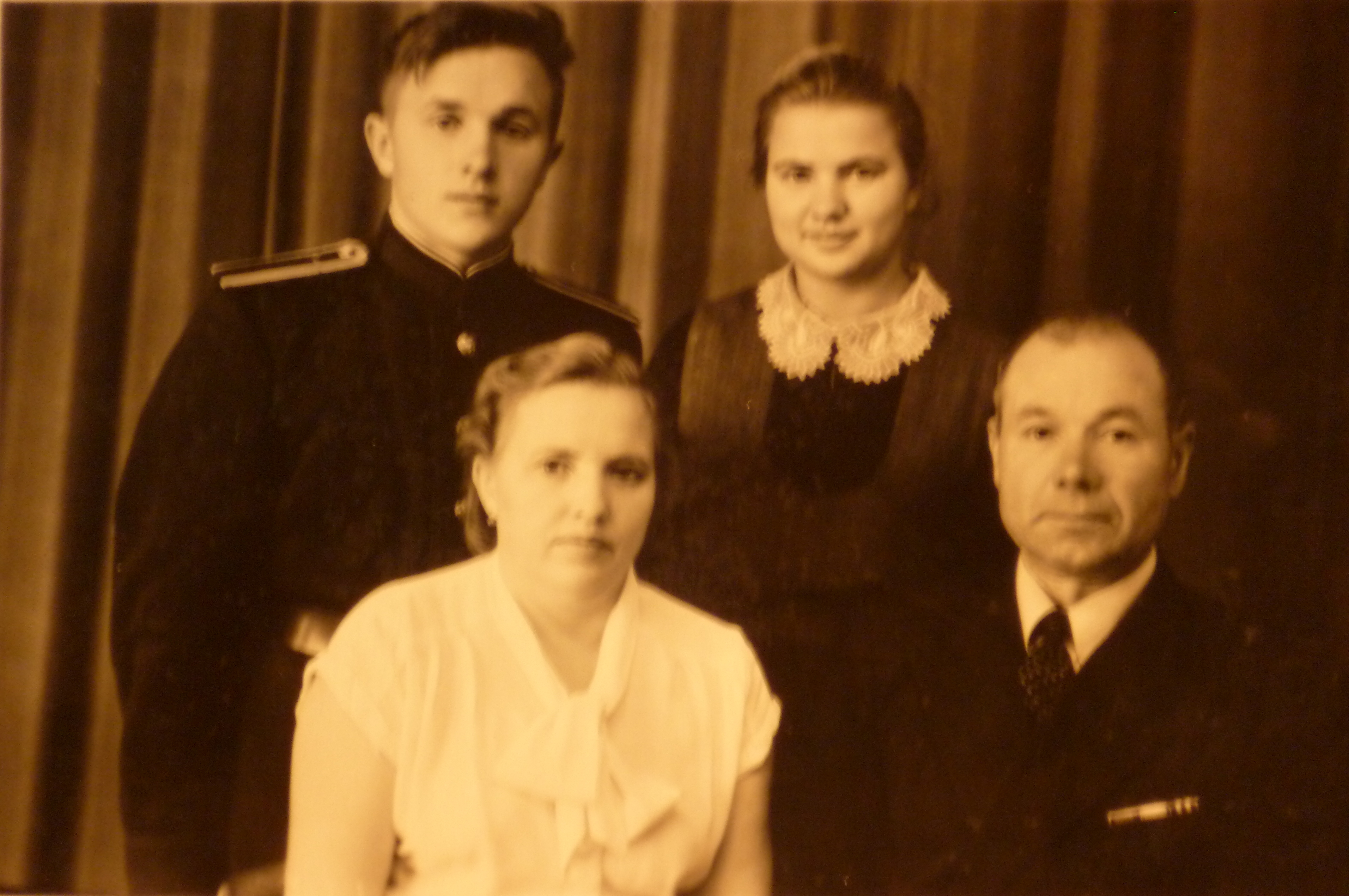
Krasnoyarsk-26. First leave.
In my second year, in the autumn of 1959, I was invited from the basketball team to join the handball squad. It was an honor and a responsibility: the school team took nothing but first place in Air Force, district, and regional championships. Our coach was Sergeant Major Pasha Nevenchenko, a man of exceptional talent. He trained us so hard—especially the throwing arm—that I had to hold my spoon and fork in my left hand because my right would no longer work. Then there were runs to the Angara, throwing large pebbles for distance. Pasha was strict but fair; we felt nothing but respect, even adoration, for him. Though his fingers looked ordinary, his grip was monstrous. A man of few words, he disciplined the disobedient by “giving them a shaking.” He always caught anyone who tried to flee—he could run the hundred meters at first-class standard—then seized him by the side, the skin, or the leg and squeezed. Blood showed through the skin and you expected the bones to crack at any moment. The method never failed. I later played for teams of a fairly high standard, but none possessed such discipline.
Handball was then played by teams of 11 on a football field. The goalkeeper defended a full-sized goal and conceded anywhere from 10 to 30 or more goals per game, making the sport more spectacular than football. Contact between attackers and defenders was freer too, almost as in ice hockey. If you finished a match uninjured, people assumed you had not given everything, had not tried to break through the defense, and had shirked. Before taking the field we removed every bandage from unhealed wounds so that opponents would not target them. Against a rough team, the match gradually became a gladiatorial fight. Give way or show softness and defeat was guaranteed. If they worked you over, you endured it; the offenders would soon come visiting at your end. Spectators, defenders, and goalkeeper alike would yell, “Here comes a customer—serve him!” The most vicious opponent had to be knocked down and landed on knees first. If he had played particularly dirty, as many as three defenders jumped on him with one aim: to put him out of action.
Army handball was serious business, especially when the opposing team consisted of enlisted men. Soldiers fought to the death for promised leave, and we showed them no mercy. In practice, we treated the regional championship as entertainment. We tried to put at least 40 goals past every city team while allowing ourselves to concede no more than 5. That was the difference in class.
I always played as a roaming defender: pushed forward in defense and held back in attack. It meant more work than anyone else. If the most dangerous attacker required personal marking, the assignment was invariably mine. I awaited every match like a holiday—a celebration of a man’s game. But the week-long training camps flew by, the championship ended, and it was back to the books to catch up. In our third year, instead of a field placement with the troops, we spent a month at Irkutsk Aircraft Plant No. 39. At the time it produced An-12 transports4 and Yak-28 interceptors.5
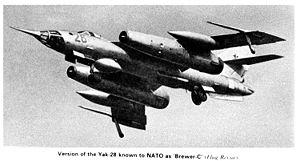
Yak-28
It was thrilling to watch sheet duralumin and extruded aluminum enter one end of the enormous workshop while finished aircraft rolled from the other onto the factory airfield—and to take part in simple assembly-line jobs ourselves. A batch of An aircraft for India was then in production, with every label, instruction, and instrument panel in English. The tests of the tail radar gunsight impressed me: the turret with its twin NR-23 cannon automatically rotated to track aircraft taking off and landing.
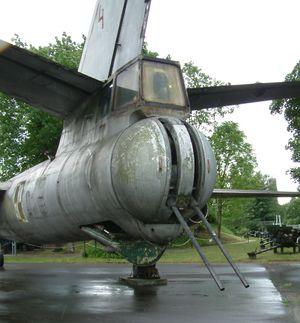
Tail gun turret of the Il-28
That same summer, using rejected factory parts, we assembled an An-12 of our own. It lacked the right wing but was suitable for the main maintenance procedures and had two left-side engines. I am sure the aircraft was completed after we left.
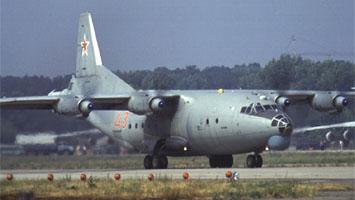
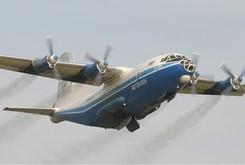
An-12
Three years of study flew by, and then came the final fitting of our brand-new officer uniforms—especially the parade greatcoat, with its narrow waist and astonishingly broad shoulders. Military fashion of the time spared no padding. As soon as the fittings began, we all felt that cadet life was ending: soon there would be no more paternal commanders, and we would part and scatter across the vast Soviet Union. We were leaving childhood, both sad and joyful. The final examinations, the formal graduation, a diploma as a technician for the An-12 aircraft and Mi-4 and Mi-8 helicopters—and an assignment to Military Unit 11284 at Tyuratam station.
I packed all the lieutenant’s kit I had been issued—the things I had “wisely” decided I would not need at first in warm Kazakhstan—and sent it to Krasnoyarsk. In my day a lieutenant received, in addition to a blanket and sheets, a mattress tick: a large sack in the tradition of the Civil War years, which a young officer was expected to fill with hay or straw at his first posting. Foolishly, I packed all my warm clothing into that sack, including both my parade and everyday greatcoats, and sent it to my parents. I assumed they would forward everything to Tyuratam nearer winter. The only “outerwear” I kept was a rain cape. How bitterly I later regretted not sending all my army property directly to the unit.
I studied a map of Kazakhstan. I would have to travel past the Aral Sea and get off after Kazalinsk, before Dzhusaly. In an encyclopedia I read about the local climate and some large jungle cats that lived in the reeds. To anticipate the story: in seven years of service on the Kazakh steppe I never encountered any unusual cats. I still had 30 days’ leave ahead of me, excluding travel. Sergei Legkov and I discussed our plans and decided to go straight to Tuapse on the Black Sea without first visiting our families in Krasnoyarsk.
Neither Sergei nor I had been to Tuapse, though my father had worked there in his youth, riveting oil tanks. We arrived in early October to warm sunshine and a breeze along the shore. This, it turned out, was the season when storms began—at least force four. Yet we had come to swim, so into the water we went. Nobody else seemed willing to enter such surf. The water was warm enough, only churned full of sand, and that did not trouble us. The difficulty was getting back ashore without bruises: the breakers rolled and pounded with astonishing force. Several times we climbed into the surrounding hills, among sparse sun-scorched grass, dense scrub, and occasional trees bearing perfectly edible fruit. We feasted on figs and immediately remembered Little Muck, who ate an unknown fruit and suffered the consequences. Carousing with gypsies in noisy restaurants was out of the question; we were penniless lieutenants, though at least the sea was free. We swam our fill and even washed some clothes, although soap lathers poorly in salt water. Those fine days—about two weeks—passed quickly. I saw Sergei off to his posting in the Far East; I was to leave two days later for Kazakhstan. The room felt empty without him, and an audit of my finances was equally dispiriting. I had more than three days of travel to Tyuratam, changing trains at Syzran, with one ruble and 56 kopecks in my pocket. We had certainly enjoyed ourselves. My young body had no training in hunger, so at every station I went onto the platform, sampled whatever the vendors offered, and rejected it—sampled and rejected. In desperation I even chewed dry beans. I love cooked beans, but dry ones taste remarkably different. At Syzran a small, cheerful group of lieutenants from our graduating class assembled, also bound for Tyuratam and still possessing a little money. We promptly ate and drank it away, then traveled another full day without food. In my case that was perhaps fortunate: ravenous, I devoured a large watermelon, with predictable results. A few words about trains on the Asian routes. From Moscow to Tyuratam took two days. Beyond Orenburg the carriage ran out of water, with every consequence of that seemingly minor event: no washing, no usable lavatory. And the crew? The local Central Asian crew pursued private trade, loading and unloading bundles, sacks, and boxes, while apparently cooking without pause on the stove in the vestibule. Smoke filled the carriage. Passengers were left to themselves; cleaning was out of the question.
Footnotes
-
The Irkutsk Junker School, founded in 1872, was reorganized as the Irkutsk Military School in 1910.
↩ -
Wingspan: 21.45 m
Fuselage length: 17.65 m
Height: 6.7 m
Wing area: 60.8 m²
Engines: 2 × VK-1A
Engine thrust: 2,770 kgf
Normal takeoff weight: 18,400 kg
Maximum overload takeoff weight: 23,200 kg
Maximum speed: 906 km/h
Service ceiling: 12,500 m
Range: 2,400 km
↩ -
On 25 August 1958, the AD industrial reactor at the Krasnoyarsk Mining and Chemical Combine entered operation. The combine’s second reactor, AD-1, has operated since 1961.
↩ -
Crew: 7
Maximum takeoff weight: 64 t
Maximum payload: 20 t
Maximum range: 4,000 km
Cruising speed: 510 km/h
Service ceiling: 10,200 m
↩ -
Crew: 2
Length: 20.02 m
Wingspan: 11.78 m
Height: 4.3 m
Maximum takeoff weight: 18,080 kg
Engines: 2x6100 kgf
Maximum speed: 1,850 km/h
Range: 2,070 km
Service ceiling: 14,500 m
↩