Chapter 4 of 29
Krasnoyarsk-26
In the summer of 1956, my father was appointed head of the installation unit p/ya 117 and had to go to some Krasnoyarsk-26.
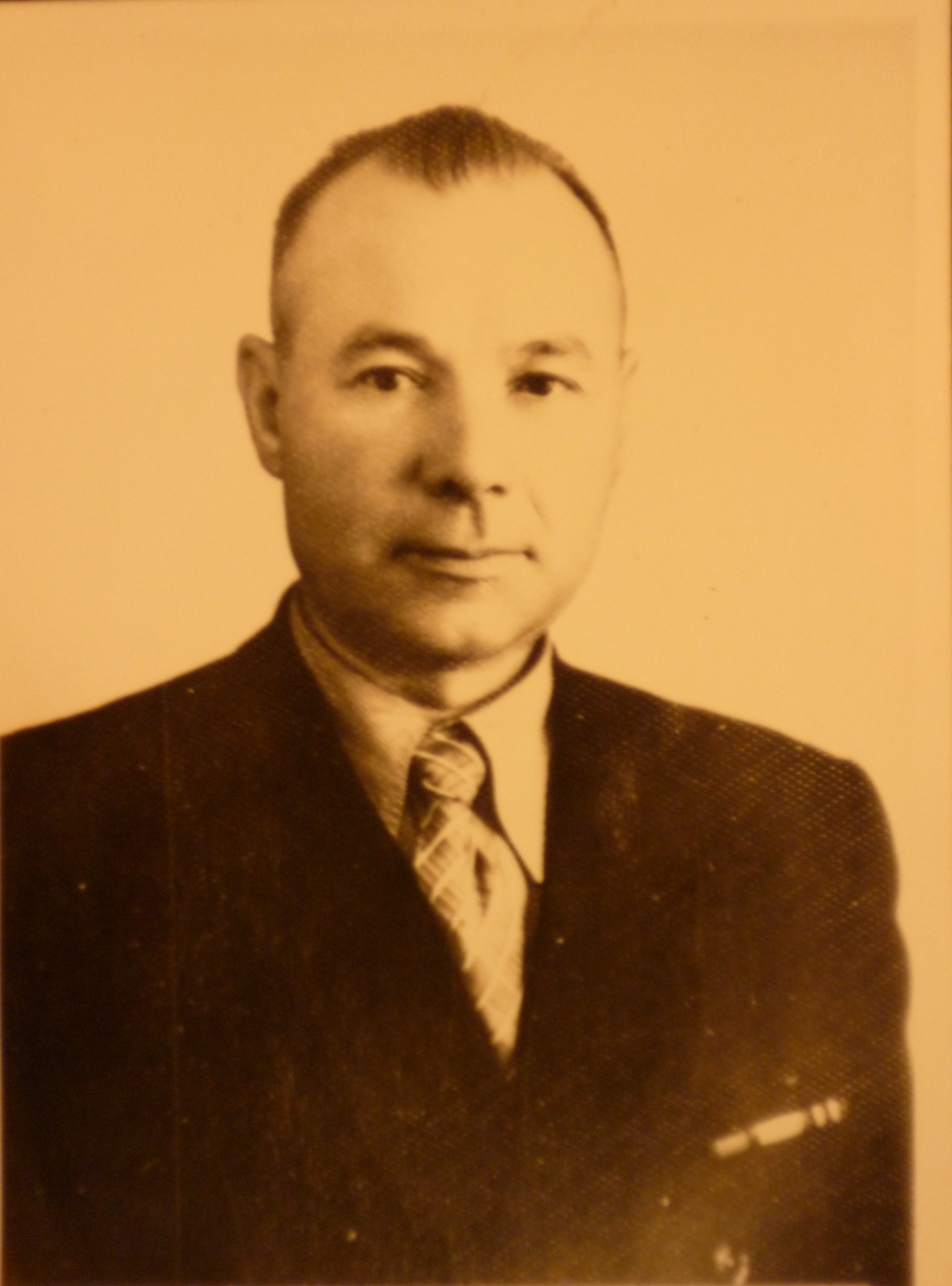
We climbed into a small sleeper in our Tomsk 13, and lying on soft sofas amid our things, the three of us in a group of cargo cars slowly rattled eastward. The weather was wonderful, comfortable. It was a pity the trip lasted only two days, and Valya stayed in Tomsk to enroll at the university.
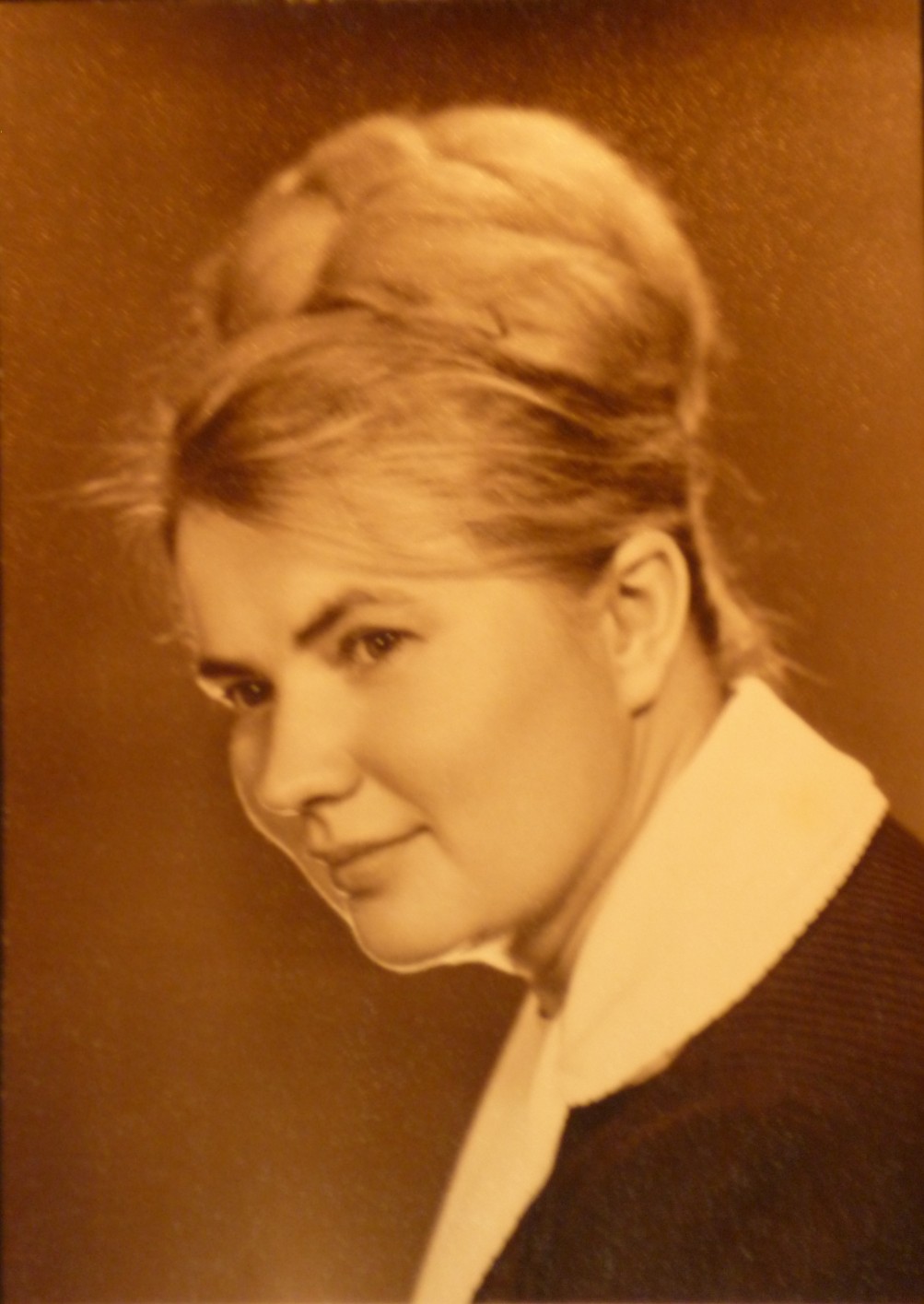
That was Valya, she had already finished Tomsk University, got an assignment to Krasnoyarsk and was preparing to soon “torment students.” To this day.
We are approaching the city of Krasnoyarsk. Ahead there were some bare reddish hills and no taiga. Mom was offended: You said it was going to be very beautiful. The beauty began a little further, right after the city.
I got my high school leaving certificate in 1958 after finishing Secondary School No. 91 in Krasnoyarsk-26.12
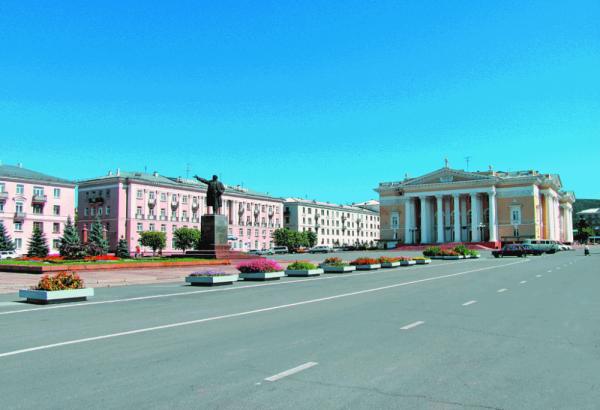
Behind the building of the city theater, the taiga can be seen on the hills.3
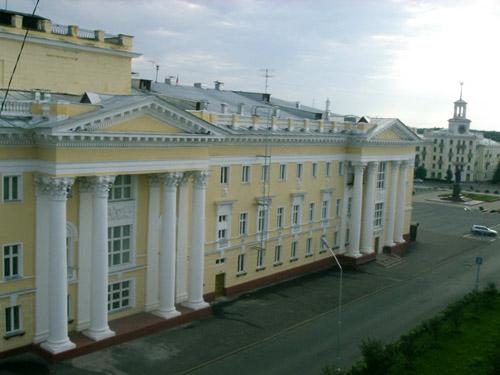
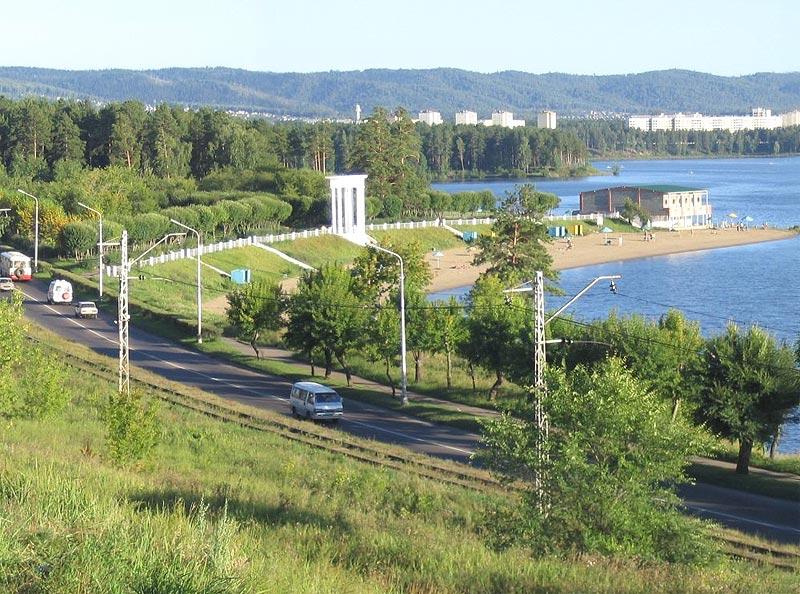
The certificate was fairly mediocre. And I was quite surprised by Yuri Shakhvorostov’s story that my portrait, as “the best physicist of the school” of all times and peoples, was in the honor gallery. The physics class, of course, singled me out, and physics was my favorite subject; in the physics room I left three homemade stands with single vacuum tubes and a rectifier. For some reason, the school years are remembered as one continuous holiday. I remember the beloved and interesting teachers: physics teacher Margarita Vasilyevna, draftsman, and the PE instructor. The PE instructor was Oleg Kirillovich Andrushchuk. As I understand now, they were talented people and in the right place. I remember classmates: Yuri Shakhvorostov, Yuri Tsvetkov, Vova Ilyashenko, Tamara Usikova, Aza Abrosimova, Sergey Legkov, Sveta Chuprova, Igor Kuznetsov, Sveta Burtseva, Galya Chernova, Vadim Gunbin, Lena Travkina, Slava Karkosa. The names of the others are mostly forgotten, though occasionally they suddenly surface in memory at unexpected moments.
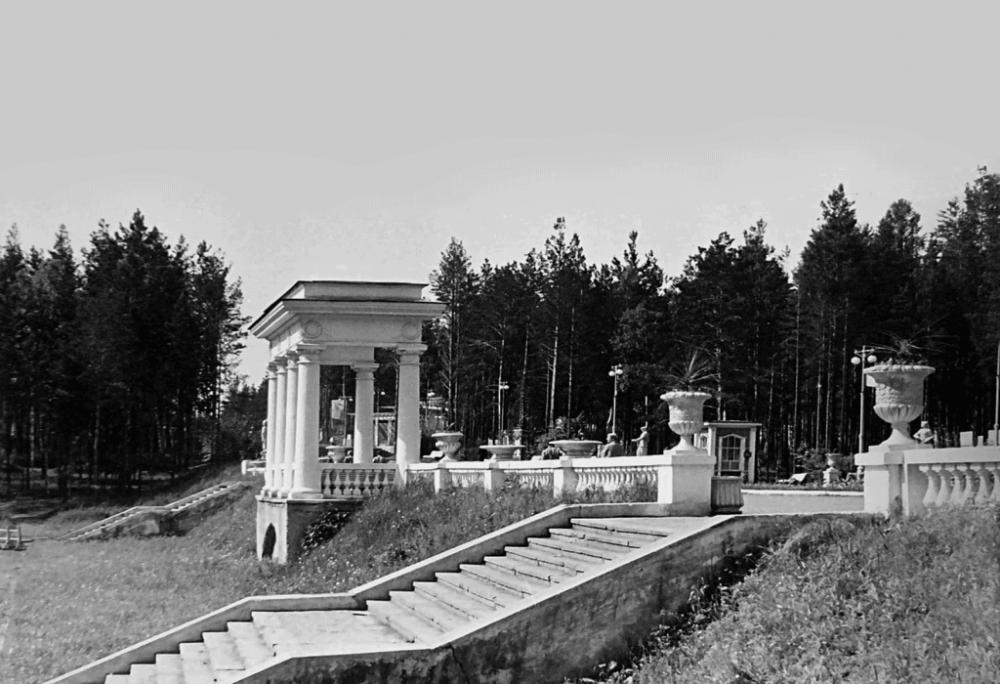
Entrance to the Park of Culture and Rest.
I sat at the last desk behind the backs of fairly large Lena Travkina and Aza Abrosimova. That let me sometimes read some gripping fiction. In 10th grade I supervised the school radio node, with the task of keeping it running and supplying dance music for school evenings and the morning all-school physical-education warm-up. The radio node was a narrow room at the right end of the school building with one window. To the left, at the entrance, stood a high rack, as tall as me, into which were quite logically built a power amplifier, radio receiver, turntable, and power supply. Of course, all of it was on vacuum tubes. I had a set of required-repertoire records, with marches and major Komsomol songs. When the young PE teacher came, and she broadcast to the whole school over the microphone, saying “sit down… jump… one, two, three…,” I had to warm up the equipment and make sure everything was normal. And then at the dance evenings, I sometimes managed to climb to the second floor and even find a partner for tango, the trendiest dance of the time.
At break, a handful of handpicked people would crowd into the little cozy radio room and listen to jazz on “ribs.” “Ribs” is a gramophone record cut on a used X-ray image. I remember that Duke Ellington’s “Caravan” had a groove worn through in two places from frequent playback.
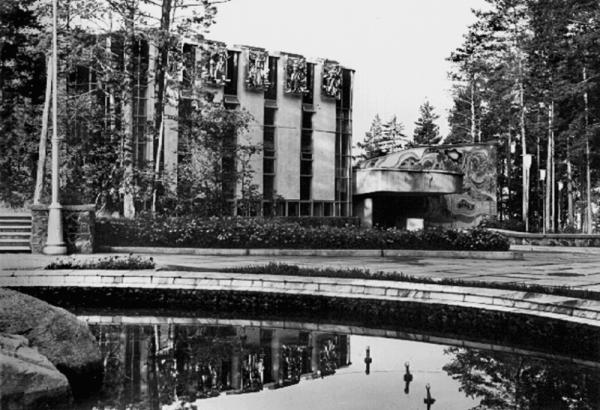
Concert and dance hall in the Park of Culture and Rest
In that same year I also finished music school in the violin class. At music school an orchestra was set up with a vocalist, and we successfully performed not only serious pieces but also lively jazz. Listeners received Dukovsky’s “Caravan,” “My Beloved” by Gershwin, and everything from “Carnival Night” very well. Not bad, as we seemed, our vocalist Kolya sang: “Maybe I will go with him on Wednesday, maybe on Thursday…” Gershwin. We picked the tunes by ear, from records and from the cassette deck. In music school’s recording room there was a big machine with open cassette compartments. We would gather as the whole orchestra and, with my help, transcribe the arrangements for each instrument onto paper, replaying separate fragments many times.
One day, while listening to a rather rollicking song with a chorus of “Only on the road will you find happiness: you go left, you go right, you go straight,” about a worried man in a cart looking for a bride, the tape slipped off the cassette player’s take-up reel. Since we had no real cassette, we improvised a reel from a matchbox. It swallowed almost half a kilometer of tape, then jumped off its axles. We began dismantling the loops and hanging them from the side lamps. Then someone got this recording reel from our experienced artist. Around midnight, the singer-accordionist’s nerves gave way. Shouting, he began tearing the tape. A cheerful fury immediately seized everyone, and the whole reel was torn into pieces. Happy idiots pushed the pieces into the tape recorder and listened, laughing. I do not remember how our leader later explained himself to the owner.
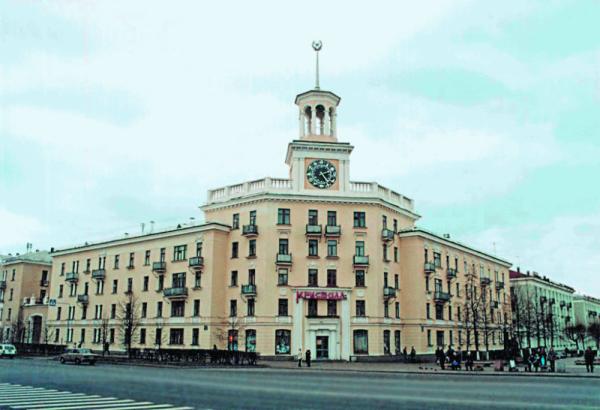
The city’s very first square
I read a lot, naturally to the detriment of studies, worked at photography and went to the radio circle, and caught the radio hobby bug. The radio circle was led by our next-door neighbor on the floor, San Sanych Gromov, a LEIS graduate. And how fun it was when the whole school went to a kolkhoz for potato harvesting. They did not push us by quotas, and at the end of the day there was a common lunch with potatoes baked in a communal bonfire. And practice at RMZ, the repair-and-mechanics plant, where I was assigned as an assistant to a lathe operator of a carousel lathe. This was less a lathe and more a serious installation, a good cab controlled from a suspended panel. Details and blanks in the horizontally rotating chuck were installed only by crane. When rough facing of the blank was underway, the powerful shrieking, whistling and churning of chips made it necessary to communicate with the turner by gestures. I was naturally not allowed near the control panel, and was only allowed to pull with a huge hook the heat-blazing violet chips from the pit under the lathe and load them into a crate on a trolley. On my very first day I burned through my
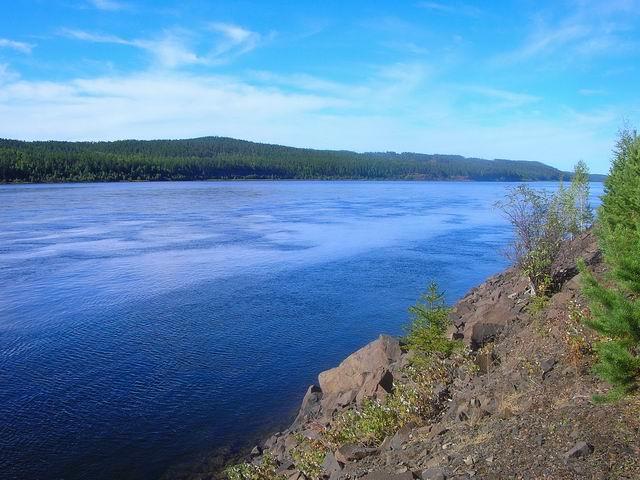
Yenisei
beautiful Czechoslovak sneakers, stepping on a red-hot spiral of chips. And when the turner started
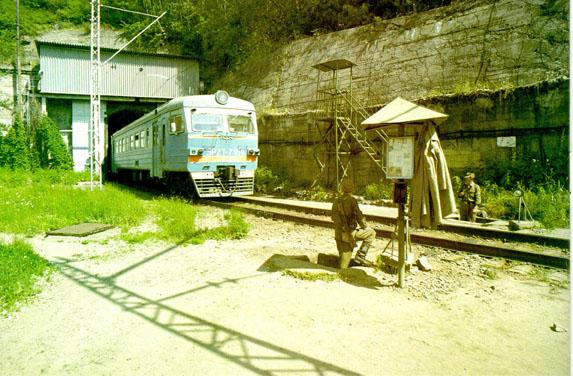
Entrance to the “Gora”
the sharpening of the cutters, I was allowed to take them to the grinder, one per trip. I would not have been able to lift two.
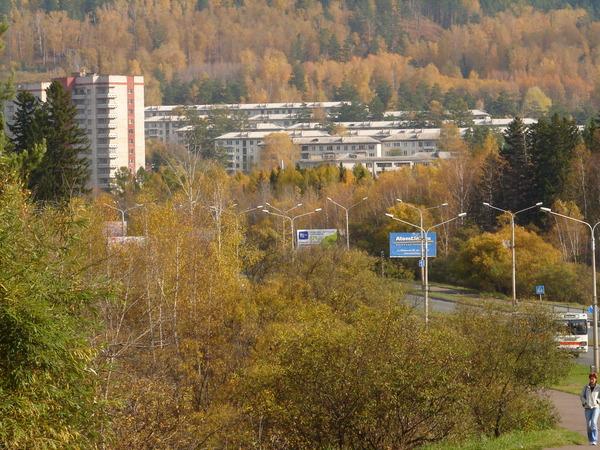
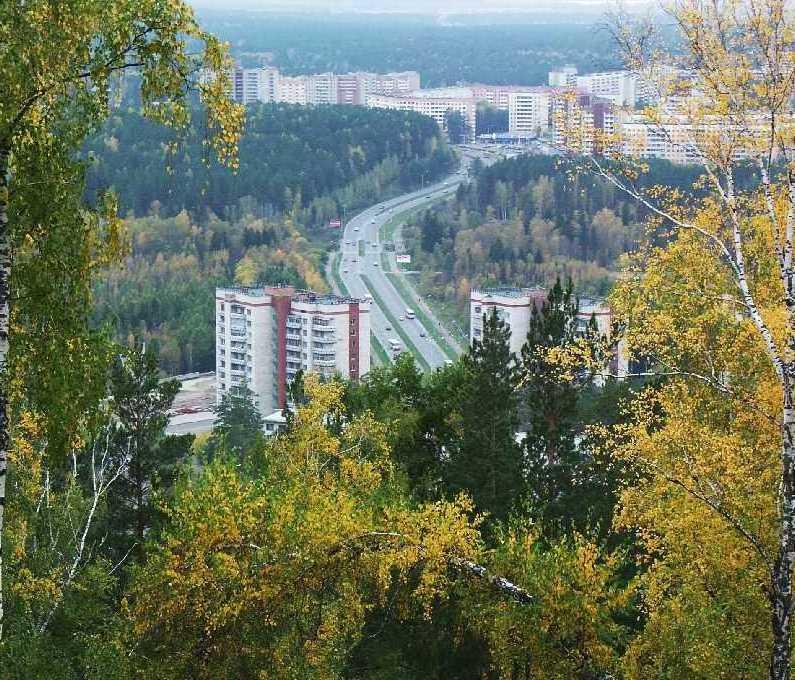
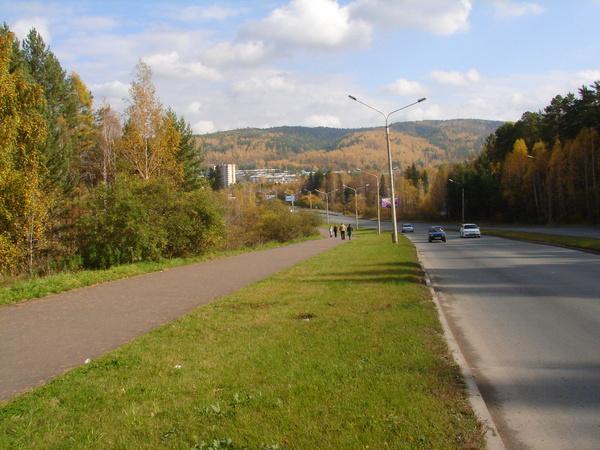
This is my Krasnoyarsk 26
Must not forget the boundless beautiful taiga and our forays there with Slava Sharov to gather cedar nuts.
It is the end of August. It is even hot during the day. We set out into the taiga for two or three days. It takes about four hours to get to the cedar grove, and in the first half of the way you have to cross a small mountain ridge with a tugun—a very gentle ascent on a path cut through grass at least two meters high. We were bound to flush out a bear on the way, walking through a wide clearing overgrown with raspberries, under high-voltage lines. So on the way we talked very loudly and shouted, just periodically yelling. The tugun ends with a fairly steep, even dangerous slope, down which we descended somehow with zigzags, on scree, on our backpacks, or on our bottoms. No room for talking there. Then we crossed a narrow-gauge railway. A little more and we walked along a beautiful ravine along a stream. We filled water and drank, and then moved on to the cedar clearing. The cedar is the tallest tree in Krasnoyarsk’s taiga. Under it are all sorts of spruces, pines, and broadleaf undergrowth.
Walking without a trail is hard, because under a beautiful carpet of moss there is practically no firm ground, only the chaotic tangle of fallen and already rotten trees. You move in zigzags over trunk hummocks. One misstep and you drop almost to your waist. It is time to stop for camp and climb a tree. A camp requires a clearing with a firm base so the fire does not sink into the moss and it is possible to sleep at night without trouble. It is good if the clearing is at least ten by ten meters. Bed gear: two small pieces of canvas. Gnusa was gone, but it was warm and we searched for a draft. Resin gatherers knock down cones with a mallet—a giant wooden hammer. They set it on the trunk of a cedar in four people and hammer it against the stem, while we had to go to the top and shake each branch individually.
Father made me very comfortable portable climber-claws in which you do not get tangled in branches. You fasten the claws tightly to your boots, choose a tree not too thick so your hands can wrap it comfortably, and off to the top. From the first meters of ascent, your hands and belly are covered in transparent, extremely sticky resin—you clench a fist and it is hard and slow to open it again. The first time it was even scary, in case you could not open your hands. And then the top of the cedar was there. Pressing your whole body to the trunk, you climb higher and higher. Stop. Further on it is dangerous, the trunk is too thin. And as the tree sways, it takes your breath away! You fly forward, you fly back with a very wide amplitude. For one of these moments alone you can climb such heights. Even greater delight comes from the view of the boundless taiga. Under you it is green, and in the distance blue. You want to fly like a bird over this beauty. But from below, your partner is already shouting that it’s time to get to work. The work is not complicated: shake the upper branches by hand, and all the lower ones by pounding and rocking with your feet. But only after a warning shout, so a cone does not fall onto your partner’s head. The cones are resinous, heavy, and from that height they fly like stones, rustling and knocking leaves off trees.
Cones make deep hollows in the coniferous carpet and must be taken out immediately and thrown into a pile. On our cones, chipmunks already worked, amusing and nimble. How curiously they chatter back and forth to each other. A chipmunk very much resembles a small squirrel, but with a much less bushy tail. It deftly shells a cone standing on its hind legs, very briskly, while peering at you with its wonderful black eyes. And it is much bolder than a squirrel, more impudent. On a good tree you can shake down up to five hundred cones. On the next tree the partner climbs. In a day we would shake no more than ten trees. Hard work. By evening we lit a large fire for roasting and steaming the cones. Steaming is very simple if there are already hot enough embers in the fire. A layer of fresh cones is poured in, and before they char, about five minutes later these cones are gathered aside, making room for a new batch. Without waiting for the cones to fully cool, you swirl them one by one over the canvas, and all those warm nuts jump out of their shells at once. We shell them over a piece of canvas and get ready-made nuts. After dinner, to bed. I do not remember it ever being cold at night. And in the morning, back home. Climb up the steep path to the ridge and along a very gentle two kilometers down. And because what had exhausted you on the tugun now, with the help of a bouncing pack full of nuts on your back, almost forces you to break into a trot and finish the path in a wild run. I’ll remind you the trail is in two meters of grass and crossed by fallen tree trunks.
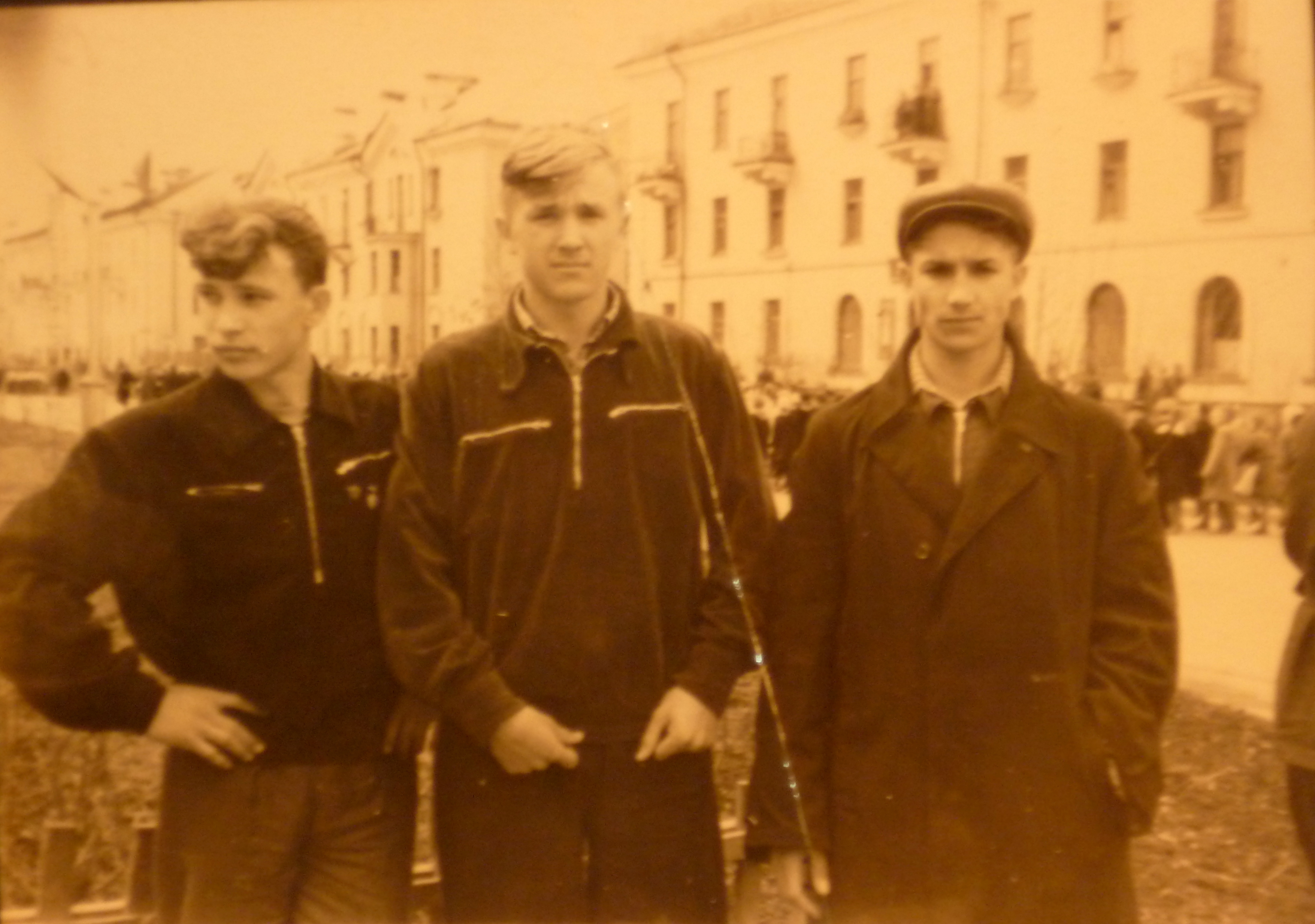
As for basketball and skiing, one could talk and talk forever. For some reason, until ninth grade, in the Tomsk school, I never played basketball, not even seeing once what it was. But I had a suitable height, and from the first days of the Krasnoyarsk school, I had to “reinforce” the class team in the in-school championship. Every game was played with a lot of spectators, mostly girls. A shout, screeching, everyone running back and forth, putting the ball in the basket. I try too, running where everyone runs, raising my hands, forgetting to lower them when there is no ball, and if it happens to end up in my hands, I instantly freeze and start to stomp in place under the girls’ encouraging shouts.
The school championship took place after lessons and just two days later, with even greater excitement, I stepped onto the court. The game went a little more consciously, no one laughed at me anymore, though I still did everything clumsily and never hit the basket at all. I signed up for the section and began training with absolute fanaticism. A couple of times, we watched instructional films about basketball technique. If someone was kicked out of class, and that was a usual punishment, the loafers went to the gym and practiced shots into the basket with their own cap. It was very good indeed if someone had a tennis ball in reserve. Then you’d be late for the next class, or skip it altogether.
It often happened that I went to music school with both hands occupied. In one case a violin case, in the other a small case with shoes and form. Intense training bent my nails and the flesh of my fingertips came off. A little, but very painfully, especially if the next day I had to attend lessons in music school.
I was very good at skiing. This was also my sport. What attracted me about skiing was mainly self-overcoming, struggle with fatigue, struggle with rivals. You know that the rivals have it hard too, but you can still push harder, because you have more will than those jellyfishes. Second place in the city in the 5km cross-country race. In short, life turned out right.
And then, in spring ’58, some loud-mouthed major from the draft office appeared at school and in one go recruited six boys to enter the Irkutsk Military Aviation Technical School—IVATU.4 I yielded without hesitation and even with some euphoria, letting myself be enchanted by the recruiter’s fairy stories. Ah, what fine and cloudless life prospects my imagination painted!
My first firsthand encounter with aviation happened in 1951 on a flight with my parents from Chelyabinsk-40 to Feodosia via Moscow on an Li-2.5 Dad then got his first leave after four years of work behind barbed wire.
We flew the whole day. Made several landings. Refilled fuel. A crowd of about ten Chelyabinsk locals, without haste, went off to the next airport canteen to nibble something, and some even to drink. In the same unhurried way, they boarded again and took off. Aside from the general ecstasy of flight, takeoffs, and landings, I also remember being amazed at the possibility of watching the earth passing under us by pressing the toilet pedal…
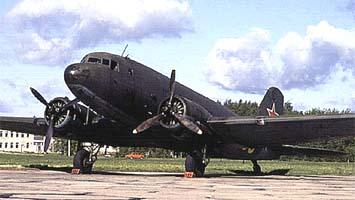
Li-2
Footnotes
-
The emergence of Krasnoyarsk-26 is connected with the construction on the banks of the Yenisei of a major atomic enterprise—the Mining and Chemical Combine. The main activity of the combine was the production of weapons-grade plutonium, the necessary component for manufacturing nuclear weapons. Unique is the fact that the atomic enterprise was placed underground in bedrock. In just eight years, with the efforts of tens of thousands of prisoners, many tunnels of the “nuclear cave” were built. By the time the new enterprise began operating in 1958, the volume of the underground workings exceeded the volume of the tunnels of the Moscow Metro. Possibly this is one of the most significant structures of the Soviet era, ranking among the first in the list of inconceivable in scale and labor-cost enterprises, factories the size of giants, canals, dams, and so on. In January 1950, after a series of surveys, a report to the government was prepared on building a third closed city under Krasnoyarsk—after Chelyabinsk-40 and Tomsk-7—along with a production complex for weapons-plutonium extraction and production, the GHK. In February, Joseph Stalin reviewed it. Interestingly, at first there were three options for the location of the residential districts:
- Build a residential complex with social-cultural facilities for 20-25 thousand people inside the mountain, 50 meters above the main object (in huge artificial caverns);
- Build the city in the Kantatsky gorge and, for camouflage, bury over it, over a special overburden chosen during tunneling, a layer of rock, then lay out gardens, plant forests, and so on;
- Place the city openly in a forest mass on the territory of the former floodplain of the Yenisei.
They settled on the last option.
But the main object was placed according to the unique design within the mountain massif, at a depth of 200 meters below the surface, on the right bank of the Yenisei. The location of the GHK in the mountain gave the object enormous stability and survivability under war conditions. In that way, it could withstand air bombardment. The design accounted for the possibility of direct nuclear strikes, and placing the object in Siberia, in the center of the country, therefore under the protection of many layers of the air-defense complex, made the GHK virtually invulnerable.
↩ -
Now it is now Zheleznogorsk. In addition to atomic industry, Zheleznogorsk produces 70% of Russian civilian satellites.
↩ -
The author once soloed with some concert in this building.
↩ -
Later renamed: the A.N. Tupolev Higher Military Aviation Technical School
↩ -
Soviet “Douglas,” a copy of the American DC-3.
Cruising speed 290 km/h
Range 2500 km
Payload 14 – 21 passengers
Landing gear is a tricycle with a non-retractable tail wheel in flight and front wheels partially retracting into the engine nacelles. On the ground the aircraft sat with the tail almost down to the ground and the nose raised high.
↩